

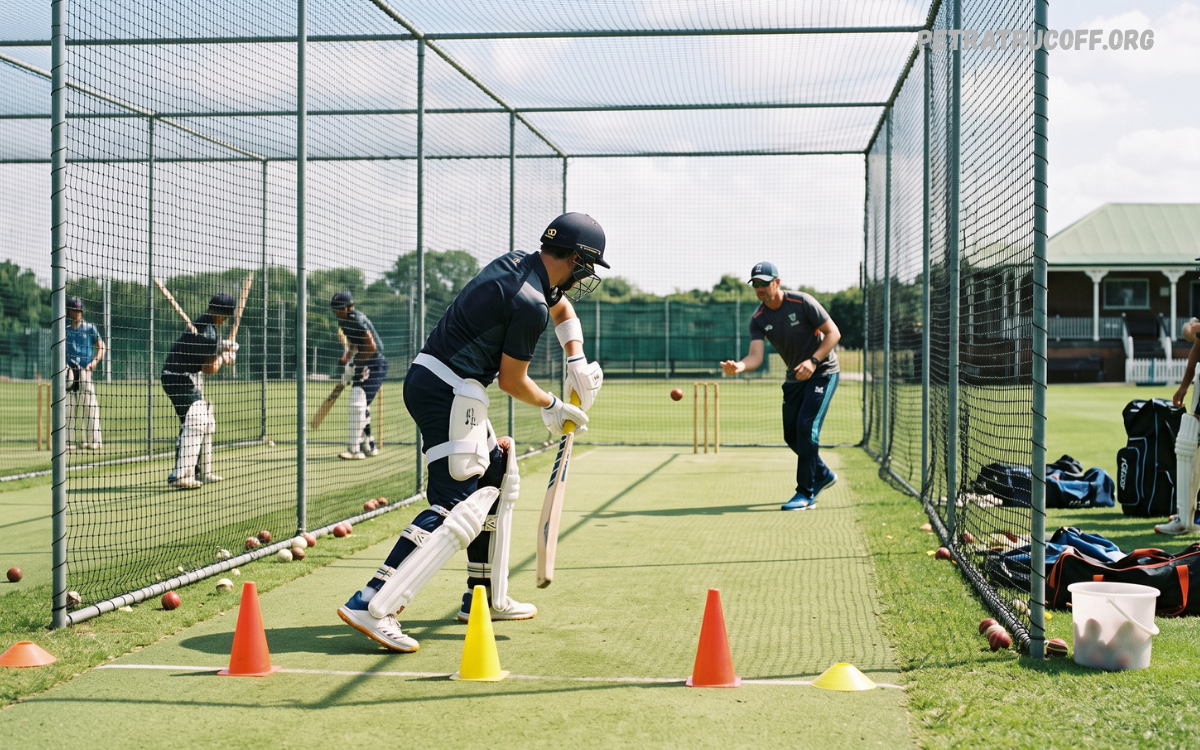
Cricket batting drills help players improve technique, timing, footwork, balance, shot selection, and confidence. A consistent practice routine lets batters repeat key movements until they become second nature.
Good batting performance depends on more than simply hitting the ball hard. Players need strong fundamentals, controlled movement, quick reactions, accurate judgment, and the ability to adapt to different deliveries.
Importance of Cricket Batting Drills
Cricket batting drills create repetition, and repetition helps players develop reliable technique. During normal matches, batters have limited opportunities to correct technical mistakes because every delivery presents a new challenge.
A structured practice routine also helps players identify weaknesses. A batter struggling against short deliveries can focus on back-foot drills, while a player having difficulty against spin can practice footwork and controlled shot selection.
Basic Batting Drills for Beginners
Beginners should start with simple drills that develop balance, bat control, and hand-eye coordination. Shadow batting is an excellent starting exercise because players can practice their stance, backlift, front-foot movement, back-foot movement, and follow-through without facing a bowler. Repeating these movements slowly helps establish correct batting patterns.
Another useful beginner exercise involves gentle underarm feeds. A partner can roll or softly toss balls toward the batter while the player focuses on watching the ball closely and playing controlled straight-bat shots. The objective should be clean contact and balance rather than power, allowing beginners to build confidence gradually.
Front-Foot Cricket Batting Drills
Front-foot drills are essential for developing drives and controlled attacking strokes. A batter can practice moving the front foot toward the ball while keeping the head over the front knee and maintaining a stable base. Straight drives, defensive blocks, and controlled cover drives can all be practiced with gentle feeds.
The main goal of front-foot practice is efficient movement rather than excessive force. Players should learn to transfer weight smoothly from the back foot toward the front foot while keeping their eyes level. Repeated front-foot cricket batting drills can improve timing, balance, and confidence against fuller deliveries.
Back-Foot Batting Drills
Back-foot practice helps batters handle short-pitched and length deliveries more effectively. A simple drill involves a coach or partner providing controlled balls that encourage the batter to move backward quickly while maintaining balance. Players can practice defensive shots, controlled cuts, and pulls according to the line and height of the delivery.
Quick movement is important during back-foot batting. The batter should avoid leaning backward excessively and should maintain a strong base while preparing the bat. Cricket batting drills focused on back-foot movement can improve reaction speed and help players become more comfortable against deliveries that require rapid adjustment.
Hand-Eye Coordination Drills
Strong hand-eye coordination allows a batter to track the ball and make accurate contact. One simple drill uses soft balls delivered from short distances at different angles. The batter concentrates on watching the ball from release until contact while playing controlled shots. The exercise can begin slowly before increasing speed.
Another useful coordination exercise involves catching or tapping a small ball with the bat under controlled conditions. The purpose is to improve visual tracking, bat control, and reaction ability. Regular coordination drills can support better timing because the batter becomes more comfortable judging movement and making precise contact.
Batting Timing Drills
Timing is one of the most important skills in cricket batting. A batter who consistently finds the middle of the bat can produce effective shots without relying entirely on strength. Timing drills should therefore focus on controlled feeds, relaxed hands, balanced movement, and watching the ball closely until contact.
Players can practice timing by asking a partner to provide gentle deliveries at different lengths. Instead of trying to hit every ball powerfully, the batter should concentrate on meeting the ball at the correct point. Cricket batting drills based on timing can help develop smoother strokes and more efficient energy transfer.
Power Hitting Drills
Power-hitting practice should begin only after a player has developed reasonable control and technique. Batters can practice hitting selected deliveries into specific areas while maintaining balance throughout the swing. The focus should remain on strong body positioning, efficient rotation, and a controlled follow-through rather than simply swinging harder.
A useful power drill involves receiving a series of predictable feeds and attempting to hit each ball into a chosen target zone. This develops both bat speed and directional control. Good power hitting comes from technique, timing, and body coordination, so players should avoid sacrificing balance in an attempt to generate maximum force.
Cricket Batting Drills Against Spin
Batting against spin requires careful footwork, patience, and good judgment. Players can practice using their feet to reach the pitch of the ball or staying back when the delivery is shorter. Controlled feeds from a spinner allow batters to work on defensive blocks, pushes, sweeps, and selected attacking shots.
Another useful drill involves placing targets around the field and asking the batter to score through different areas. This encourages intelligent shot selection rather than hitting every delivery aggressively. Cricket batting drills against spin can help players recognize length earlier and develop greater confidence when facing different types of spin bowling.
Cricket Batting Drills Against Fast Bowling
Fast-bowling practice should emphasize preparation, reaction, balance, and safe decision-making. Batters can begin with controlled pace before progressing to faster deliveries as their confidence improves. Practicing defense and leaving the ball can be just as valuable as practicing attacking strokes because good judgment is essential against pace.
Players can also work on short-ball responses using appropriate coaching and protective equipment. The focus should be on reading the delivery early, moving efficiently, and choosing a suitable response. Cricket batting drills against fast bowling can improve reaction skills while helping players develop a calmer approach under pressure.
Batting Footwork Drills
Footwork connects the batter’s body movement with the shot. A useful drill involves calling out different lengths while the batter responds by moving forward, backward, or across before playing a controlled stroke. This exercise helps players develop quicker movement and encourages them to respond to the ball rather than committing too early.
Another drill uses cones or markers placed around the batting crease. Players move between the markers before receiving a feed, focusing on maintaining balance and returning to a ready position. Consistent footwork practice can improve coordination, reduce unnecessary movement, and create a stronger foundation for different batting shots.
Batting Drills for Shot Selection
Good shot selection separates controlled batting from unnecessary risk. Players can practice receiving different deliveries and deciding whether to defend, attack, leave, or rotate the strike. Coaches can vary the line, length, and pace so the batter learns to make decisions based on the delivery rather than following a predetermined shot pattern.
A useful decision-making drill gives the batter specific scoring zones while treating certain deliveries as defensive opportunities. This encourages awareness of field placement and match situations. Cricket batting drills focused on shot selection can help players become more disciplined and reduce mistakes caused by attacking deliveries that do not suit their strengths.
Reaction and Reflex Batting Drills
Reaction drills are useful for improving a batter’s ability to respond quickly to unexpected deliveries. A coach can provide unpredictable but controlled feeds from different angles while the batter remains in a balanced stance. The player focuses on tracking the ball and responding naturally rather than predicting the exact delivery.
Soft-ball reflex exercises can also be performed from short distances. The coach changes the direction and speed of the feed while the batter reacts with controlled defensive movements.
Read Also: Roblox Beginner’s Guide to Getting Started
Solo Cricket Batting Drills
Players can complete many useful batting exercises without a bowling partner. Shadow batting, mirror practice, wall rebounds, and controlled ball drops can all help develop technique. A batter can use a mirror to observe stance, head position, bat path, and follow-through while repeating movements slowly and accurately.
Solo practice becomes more effective when players set specific goals for each session. Instead of taking random swings, a batter might spend one session on front-foot movement and another on back-foot control. Cricket batting drills performed with clear objectives can make individual practice more organized and productive.
Cricket Batting Drills for Timing and Placement
Placement drills teach batters to control where the ball travels. Players can place cones in areas such as extra cover, mid-wicket, square leg, and point, then attempt to guide appropriate deliveries toward those targets. The objective is controlled placement rather than maximum power.
These drills also develop awareness of field positions. A batter learns that different deliveries create different scoring opportunities and that accurate placement can produce runs with less effort. Regular cricket batting drills for placement can make a player’s stroke selection more versatile and help develop smarter scoring options.
Net Practice Batting Drills
Net sessions provide an opportunity to combine individual skills against realistic bowling. Players should enter nets with a clear objective rather than simply trying to hit every delivery. One session might focus on defense, another on playing spin, and another on scoring through specific areas.
A productive net session should include different phases. Players can begin with controlled technical practice, progress to match-like deliveries, and finish with a short pressure scenario. Combining focused cricket batting drills with realistic net practice allows players to transfer technical improvements into competitive situations.
Cricket Batting Drills for Match Preparation
Match preparation drills should recreate situations that a batter may face during a game. Players can practice chasing a target, protecting a score, facing a new ball, or rotating the strike. These exercises develop decision-making while adding realistic pressure to the batting session.
Situational practice also encourages players to think beyond individual shots. A batter should consider the required scoring rate, wickets remaining, field placement, bowling type, and match situation. Cricket batting drills that simulate real match conditions can improve tactical awareness and help players approach competitive innings with greater confidence.
Common Batting Mistakes During Drills
One common mistake is focusing entirely on power. Players sometimes swing harder when their real problem is timing, footwork, or balance. Another mistake is repeating a drill without understanding its purpose. Every cricket batting drill should have a clear objective, and players should prioritize quality movement over the number of repetitions.
Poor head position, excessive movement, an unstable base, and watching the ball too late can also affect batting performance. Players should use coaching feedback, video analysis, or a mirror when possible. Identifying technical issues early can prevent incorrect movements from becoming established habits.
How to Build a Cricket Batting Drills Routine
A balanced training session can begin with a warm-up and shadow batting before progressing into technical drills. Players can then spend time on front-foot movement, back-foot movement, timing, coordination, and selected shots. The final section can include match-like practice where several skills are combined.
Training volume should match the player’s age, experience, fitness, and schedule. Quality practice is more useful than performing large numbers of repetitions while becoming tired and losing technique. A consistent routine that gradually increases challenge can provide better long-term development than occasional intensive sessions.
Frequently Asked Questions
Frequently Asked Questions
What are cricket batting drills?
Cricket batting drills are structured exercises that help improve batting skills such as timing, footwork, balance, bat control, shot selection, and hand-eye coordination.
Which cricket batting drills are best for beginners?
Beginners can start with shadow batting, front-foot movement, straight-bat defense, gentle underarm feeds, and basic hand-eye coordination drills.
How can cricket batting drills improve timing?
Regular practice with controlled feeds helps batters watch the ball closely, improve contact points, maintain balance, and develop better timing.
Can I practice cricket batting drills alone?
Yes. Shadow batting, wall-ball exercises, ball drops, mirror practice, and footwork exercises can be performed without a bowling partner.
How do I improve batting footwork?
Practice moving forward and backward according to the ball length. Focus on quick movement, balance, head position, and returning to a ready stance.
Which drills help improve batting against fast bowling?
Reaction drills, controlled pace practice, defensive movements, short-ball response drills, and judgment exercises can help batters become more comfortable against pace.
Which cricket batting drills help against spin?
Footwork drills, forward-defense practice, back-foot movements, sweep practice, and length-judgment exercises are useful against spin bowling.
How often should I practice batting drills?
Consistent practice is more important than excessive practice. A suitable routine depends on your age, experience, fitness, schedule, and training goals.
How can I improve power hitting?
Build strong fundamentals first, then practice controlled power shots with proper body rotation, bat speed, balance, and timing rather than relying only on strength.
What is the most important batting drill?
There is no single best drill for every player. The most useful drill depends on individual weaknesses, such as timing, footwork, reaction speed, or shot selection.
Conclusion
Cricket batting drills provide a practical way to develop the technical and mental skills required for consistent batting. From basic footwork and hand-eye coordination to timing, placement, spin practice, and fast-bowling preparation, each drill can target a specific part of batting performance.
The best results come from consistency, correct technique, gradual progression, and realistic match practice. Players should identify their weaknesses, choose suitable cricket batting drills, and track improvement over time.

1 comentario
Pingback: Batting Tips for Beginners: A Complete Guide to Better Cricket Batting - PetraTrucoff