

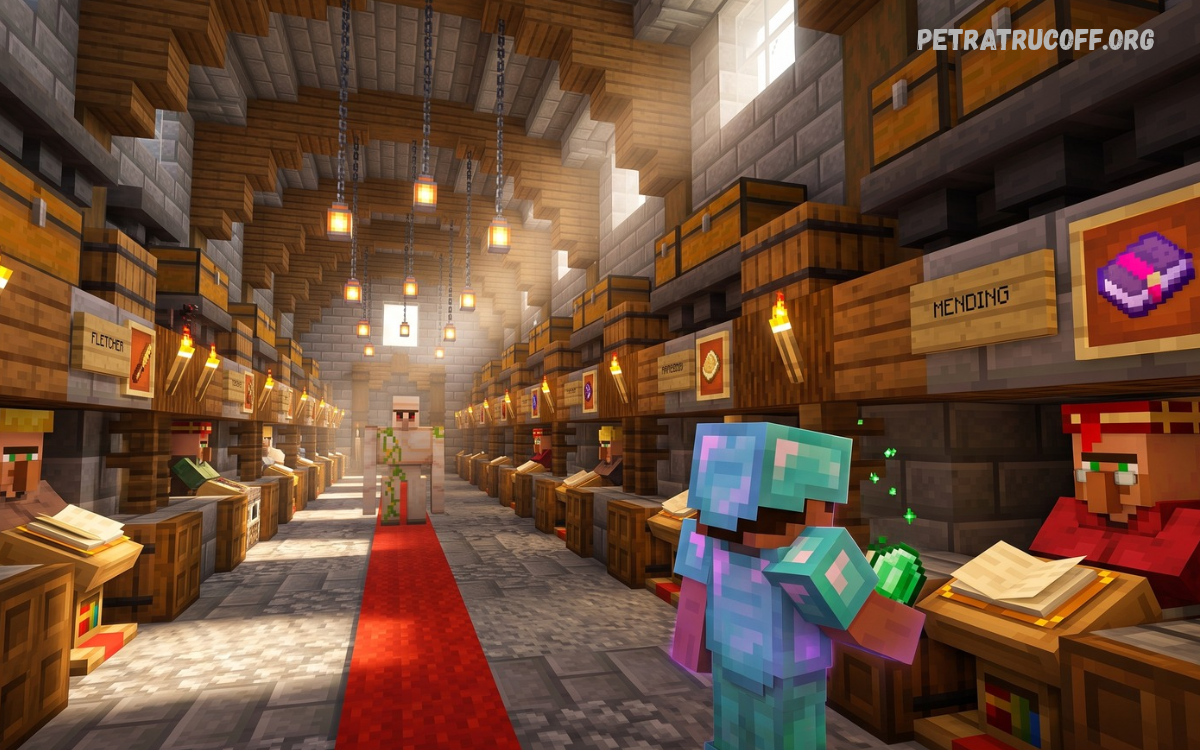
The Minecraft Village Trading System lets players trade useful items with villagers for emeralds, enchanted gear, building materials, food, and other valuable resources. Learning this system makes survival gameplay easier and more rewarding.
Villagers offer different trades according to their professions, available stock, and experience levels. Understanding their mechanics allows players to develop efficient trading strategies, establish profitable trading halls, and obtain essential items without relying entirely on mining or exploration.
What Is the Minecraft Village Trading System?
The Minecraft Village Trading System lets players exchange specific items with villagers. Each villager profession provides different trading opportunities, including food, tools, weapons, armor, books, and decorative blocks.
Emeralds serve as the primary trading currency, although villagers can also accept other resources. Players can unlock additional offers by completing transactions, making villager trading an important part of long-term survival progression.
How Villager Trading Works in Minecraft
Villagers display available trades through an interaction menu. Players select an offer, place the required items into the trading slots, and complete the exchange to receive the selected reward.
Each trade requires specific materials, and some offers become unavailable after repeated use. Villagers can restock eligible offers by accessing their assigned job-site blocks during working hours.
Minecraft Villager Professions and Their Trades
Villager professions determine the products available through the Minecraft Village Trading System. Farmers exchange agricultural products, librarians provide enchanted books, and toolsmiths offer tools that support mining and resource collection.
Other professions specialize in armor, weapons, maps, building materials, and everyday supplies. Selecting suitable villagers allows players to build a balanced trading network that supports different survival objectives.
Farmer Villager Trading Guide
<text>Farmers provide useful food-related trades, making them valuable partners during the early stages of survival gameplay.</text>
Farmer villagers can purchase crops such as wheat, carrots, potatoes, and beetroot, depending on their available offers. Players with established farms can convert surplus harvests into emeralds while maintaining a reliable food supply.
Best Farmer Trades for Emeralds
Wheat and other farm products can provide a steady source of emeralds when players produce them in large quantities. A carefully organized crop farm reduces the effort required to collect trading materials.
Farmers may also offer food items such as bread, pumpkin pie, cookies, and golden carrots. Their exact offers depend on profession level and the trading options available in the current game version.
Librarian Villager Trading Guide
Librarians are among the most useful villagers because their trades can include enchanted books and other knowledge-related items. These offers help players improve equipment, protect valuable tools, and prepare for difficult adventures.
Players can create librarians by placing lecterns near eligible unemployed villagers. In versions that allow profession changes before the first completed trade, replacing the lectern may refresh available offers.
Best Librarian Trades for Enchanted Books
Librarians can provide enchantments that improve weapons, armor, tools, and other equipment. Examples include Efficiency, Unbreaking, Protection, and Mending, although individual offers vary.
Enchanted books allow players to customize equipment through an anvil. Building relationships with several librarians creates more opportunities to obtain useful enchantments without depending entirely on random loot.
Armorer Villager Trading Guide
Armorers specialize in protective equipment, including iron armor and higher-tier armor offers. Their trades can help players prepare for caves, hostile mobs, Nether exploration, and other dangerous environments.
A blast furnace serves as the armorer’s job-site block. Players can assign this profession to an eligible unemployed villager and unlock additional offers by completing available trades.
Benefits of Trading With Armorers
Armorer villagers can reduce the time needed to obtain suitable armor during survival progression. Higher-level offers may include diamond armor pieces, with enchantments depending on the specific trade.
Players should compare trading costs with available crafting materials before spending emeralds. A strong collection of armorers can become particularly valuable when emerald production is already well established.
Toolsmith Villager Trading Guide
Toolsmiths provide tools used for mining, farming, and general resource collection. Their offers may include stone, iron, and diamond tools, making them useful throughout different stages of a survival world.
The smithing table serves as the toolsmith’s job-site block. Assigning this block to an eligible villager creates access to the profession and its associated trading offers.
Best Tools to Obtain Through Trading
Diamond pickaxes, axes, and other tools can save valuable crafting materials and preparation time. Players can use toolsmith trades to maintain a dependable supply of equipment for large construction projects.
Toolsmiths become more useful when their trades complement the player’s existing equipment. Combining purchased tools with enchantments from librarians creates a practical progression system for long-term survival.
Weaponsmith Villager Trading Guide
Weaponsmiths specialize in combat equipment, including swords and axes. Their offers can help players prepare for hostile mobs, dungeon exploration, and other encounters that require dependable weapons.
The grindstone serves as the weaponsmith’s job-site block. Players can use this profession to access weapon-related offers and potentially obtain diamond equipment through advanced trades.
Why Weaponsmiths Matter
Weaponsmith trading reduces dependence on crafting every weapon from collected resources. Players can spend emeralds to obtain equipment while preserving diamonds for other important upgrades.
The value of each offer depends on its price, available enchantments, and the player’s current equipment. Comparing weaponsmith trades with crafting options helps maintain an efficient resource budget.
Fletcher Villager Trading Guide
Fletchers specialize in ranged-combat supplies and archery-related equipment. Their trades can include sticks, arrows, bows, crossbows, and other items depending on profession level and available offers.
A fletching table serves as the profession’s job-site block. Players can assign this block to an eligible unemployed villager and begin unlocking its trading opportunities.
Stick Trading for Emeralds
Stick trading can provide an accessible emerald source because sticks are easy to produce from wood. Players with large tree farms can turn surplus logs into sticks and exchange them for emeralds when a suitable offer is available.
This strategy works especially well during early survival progression, when players have limited access to valuable minerals. A renewable wood supply makes the process repeatable without requiring dangerous exploration.
Cleric Villager Trading Guide
Clerics provide trades involving materials and items associated with potions and magical progression. Their offers may include redstone dust, lapis lazuli, glowstone, and other useful resources.
A brewing stand serves as the cleric’s job-site block. Establishing cleric trades gives players another way to obtain important crafting ingredients without collecting every material directly from the environment.
Useful Cleric Trades
Clerics may purchase rotten flesh, allowing players to exchange certain drops from hostile mobs for emeralds. This can be useful when players regularly defeat zombies during exploration or nighttime survival.
Advanced cleric offers may include valuable items such as ender pearls. These trades can support progression toward the End, although availability and prices depend on the villager’s level and game version.
Cartographer Villager Trading Guide
Cartographers specialize in maps and exploration-related items. Their trades can help players locate certain structures and discover new areas without relying entirely on manual searching.
A cartography table serves as the cartographer’s job-site block. These villagers may purchase paper and offer maps, banners, or other exploration-related goods as their trading levels increase.
Exploring With Cartographer Trades
Some cartographer offers provide maps leading to structures such as woodland mansions or ocean monuments. These maps can make long-distance exploration more organized and rewarding.
Players should prepare suitable equipment before following a structure map. Food, weapons, armor, spare tools, and navigation supplies help reduce risks during unfamiliar journeys.
Mason Villager Trading Guide
Masons, also called stone masons in some contexts, specialize in stone-related building materials. Their offers may include bricks, terracotta, quartz, and different stone products.
A stonecutter serves as the mason’s job-site block. Players who frequently construct houses, castles, pathways, or decorative structures can benefit from maintaining several mason villagers.
Best Mason Trades for Builders
Mason trades can provide access to decorative blocks that would otherwise require additional crafting or resource gathering. These offers become particularly helpful during large building projects that consume substantial quantities of materials.
Players should establish a reliable emerald supply before purchasing large block quantities. Combining mason trades with farmer or fletcher trades can create an efficient resource exchange network.
Butcher Villager Trading Guide
Butchers specialize in food-related products, particularly cooked meat and other prepared foods. Their offers can help players obtain supplies while managing excess animal products from livestock farms.
The smoker serves as the butcher’s job-site block. Players can assign this block to an eligible villager to establish the profession and access available trades.
Using Butchers for Food Management
Butchers may purchase certain raw meats and offer cooked food in return for emeralds or other items. These exchanges can help players manage livestock resources without cooking every item themselves.
A balanced animal farm can support both personal food requirements and villager trading. Players should maintain sufficient breeding animals to keep their farms productive over time.
Fisherman Villager Trading Guide
Fishermen provide fishing-related products and can purchase certain fish items. Their offers may include fishing rods, cooked fish, campfires, and other resources connected to fishing.
A barrel serves as the fisherman’s job-site block. Players can establish this profession to create another option for exchanging renewable resources and obtaining useful supplies.
Fishing Trades for Survival Players
Fishing can produce food and other items while providing materials for fisherman trades. However, the exact usefulness of fishing depends on available water, equipment, time, and the player’s preferred survival strategy.
Players who fish regularly may benefit from keeping a fisherman near their storage area. This arrangement reduces unnecessary travel and helps organize the exchange of fish and other resources.
Shepherd Villager Trading Guide
Shepherds specialize in wool and decorative materials, making them useful for players who enjoy building and interior design. Their offers may include wool, carpets, beds, banners, and dyes.
A loom serves as the shepherd’s job-site block. Players can assign the profession to an eligible unemployed villager and unlock additional offers through completed trades.
Wool and Dye Trading Strategies
Sheep farms provide renewable wool in multiple colors, depending on the available animals and dye resources. Players can exchange surplus wool for emeralds when suitable shepherd offers are available.
Shepherds can also help players obtain decorative items for houses and community buildings. Keeping several sheep colors in a nearby farm supports both creative construction and trading goals.
Leatherworker Villager Trading Guide
Leatherworkers specialize in leather equipment and related items. Their offers may include leather armor, saddles, and other products, depending on profession level and the game’s trading configuration.
A cauldron serves as the leatherworker’s job-site block. Players can assign this block to an eligible unemployed villager to establish the profession and begin accessing its offers.
When Leatherworker Trades Are Useful
Leatherworkers can provide equipment or items that are inconvenient to obtain through other methods. Saddles are particularly useful for players who want to ride certain animals during exploration.
Leather trading may also help players exchange surplus leather for emeralds. Since leather can be obtained through animal farming, this profession can complement an established livestock operation.
Minecraft Villager Trading Levels Explained
Villagers generally progress through five profession levels: Novice, Apprentice, Journeyman, Expert, and Master. Completing available trades earns experience that unlocks higher-level offers.
Each profession has its own collection of potential trades, and higher levels may introduce more valuable equipment or specialized items. Players should review the trading menu regularly to identify offers worth unlocking.
How to Level Up Villagers Faster
Completing affordable, useful trades is a straightforward way to develop villager professions. Players can prioritize renewable materials and frequently available offers to build experience without wasting valuable resources.
Villagers also need access to eligible job-site blocks to restock their trades. A well-organized trading area makes it easier to manage professions, track offers, and maintain a dependable supply of emeralds.
How Emeralds Work in the Minecraft Village Trading System
Emeralds are the main currency used for many villager transactions. Players can obtain them through mining, chest loot, raids in applicable versions, and exchanges with villagers who purchase common resources.
A dependable emerald supply gives players more freedom to buy equipment, enchanted books, food, and building materials. Instead of selling every resource, players should reserve important materials for crafting and progression.
Best Ways to Earn Emeralds
Crop farming, stick production, paper crafting, and other renewable resource activities can provide repeatable trading opportunities. The best method depends on the available villagers, farm size, and current trading offers.
Players should compare each trade’s cost and output before investing substantial time. Efficient trading focuses on renewable materials, manageable production requirements, and offers that support immediate survival goals.
How to Create a Minecraft Villager Trading Hall
A trading hall is a dedicated area where players organize villagers by profession. It provides convenient access to multiple offers and makes resource exchanges easier to manage.
A successful trading hall should include safe villager spaces, clear pathways, lighting, job-site blocks, and suitable access to workstations. Organizing villagers by profession reduces confusion and improves daily trading efficiency.
Read Also: Minecraft Gold Farm Design: Complete Building Guide
Essential Trading Hall Design Tips
Use separate spaces for librarians, farmers, smiths, and other professions. Label each area with signs or item frames so players can quickly identify the villager offering a specific product.
Provide enough room to interact with villagers and access their job-site blocks when restocking is required. Secure entrances, adequate lighting, and protective barriers can help prevent unwanted mob encounters.
How to Restock Villager Trades
Villagers can restock eligible trades by working at their assigned job-site blocks during working hours. Once a trade reaches its usage limit, players may need to wait until the villager can restock before making another exchange.
Restocking does not happen indefinitely without suitable conditions. Players should verify that each villager can reach or access the appropriate workstation and that the trade is eligible for replenishment.
Common Restocking Problems
A villager may fail to restock if its job-site access is disrupted or the workstation assignment becomes unavailable. Other villagers competing for nearby job-site blocks can also complicate workstation management.
Keep workstations organized and observe villager behavior when a trade stops replenishing. In multiplayer environments, version differences and server settings may affect how villagers interact with job-site blocks.
How to Get Discounts From Villagers
Villager prices can change according to several game mechanics, including demand, reputation-related effects, and applicable status effects. Some versions also include special mechanics that affect the prices offered by villagers.
Players should avoid assuming every discount works identically across Minecraft editions and versions. Checking the current trading menu helps confirm the actual cost before committing valuable resources.
Maintaining Better Trading Prices
Repeatedly using a trade may affect its price through demand mechanics. Rotating between different villagers and offers can help players avoid relying entirely on one heavily used transaction.
Certain status effects and gameplay events may also influence trading prices in applicable versions. Players should learn which mechanics exist in their edition before building a strategy around discounts.
Minecraft Villager Trading Changes Between Editions
Minecraft Java Edition and Bedrock Edition share the main villager trading system, but some details can differ. These differences may affect villager behavior, profession management, prices, and other gameplay mechanics.
Players should consult version-specific information before following advanced trading tutorials. A strategy that works in one edition or update may require adjustments in another version.
Checking Your Minecraft Version
The game version can influence which trading mechanics and optional experimental features are available. Players should check their installed version and review relevant patch notes before changing an established trading hall.
Some worlds may also use experimental settings that alter villager trading rules. Understanding these settings helps players avoid confusion when a tutorial describes mechanics that do not match their world.
Villager Trading and Enchanted Equipment
Villager trading can support equipment progression by providing tools, armor, weapons, and enchanted books. Combining these offers with crafting and anvil mechanics creates a flexible way to prepare for difficult adventures.
Librarians are particularly important for players seeking specific enchantments. However, available book trades depend on the game version and villager mechanics, so players should verify offers rather than expecting every enchantment immediately.
Combining Trades With Anvils
Anvils allow players to apply enchanted books to compatible equipment. This approach helps customize armor and tools according to mining, exploration, combat, or construction requirements.
Players should monitor anvil costs and equipment durability before completing upgrades. Planning enchantments in advance reduces wasted experience and helps maintain a reliable set of tools.
Common Minecraft Village Trading Mistakes
One frequent mistake is spending emeralds on items that are easy to craft or collect. Players may also overlook renewable trades, fail to organize workstations, or assume villagers can restock without proper access to their job-site blocks.
Another common problem is completing a trade before checking its value. Reviewing the requested materials, reward, and available alternatives helps players make better decisions and preserve important resources.
How to Avoid Trading Problems
Keep track of useful offers and separate villagers according to their professions. Maintain sufficient emeralds, store renewable trading materials nearby, and ensure villagers can access the workstations required for their jobs.
Before completing a transaction, inspect the trading menu carefully. This habit helps prevent accidental exchanges and supports a more organized approach to village development.
Advanced Strategies for Efficient Villager Trading
Experienced players can improve trading efficiency by combining renewable farms, specialized villagers, storage systems, and carefully planned work areas. A steady supply of crops, wood products, paper, and other materials makes repeated exchanges easier.
Players can also maintain backup villagers for important professions. Additional librarians, toolsmiths, and farmers provide more trading options when a preferred offer becomes unavailable or requires restocking.
Building a Sustainable Trading Network
A sustainable trading network balances resource production with the player’s actual needs. Instead of creating every possible villager profession immediately, start with the offers that support survival, equipment upgrades, and current building projects.
Expand the network as resource production increases. This gradual approach reduces unnecessary construction, limits resource waste, and creates a trading system that remains useful throughout the world.
Best Villager Trades for Beginners
Beginners should focus on trades that use common resources and provide meaningful rewards. Farmer trades, stick exchanges with fletchers, and suitable paper trades can offer accessible ways to earn emeralds.
Librarians and smithing professions become more important as players advance. Enchanted books, improved tools, and stronger armor can help prepare players for exploration and combat without requiring every item to be crafted from scratch.
Beginner Trading Priorities
Start by locating a village and identifying its available professions. Gather common materials, inspect villager offers, and prioritize transactions that provide emeralds or essential supplies at reasonable costs.
Protect villagers from hostile mobs and maintain access to their job-site blocks. Once the basic trading system works reliably, add more professions to support specialized equipment and construction goals.
Frequently Asked Questions
What Is the Minecraft Village Trading System?
The Minecraft Village Trading System lets players trade items with villagers for emeralds, equipment, food, enchanted books, and other useful resources. Different villager professions provide different offers.
How Do I Get Emeralds From Villagers?
Trade materials such as crops, sticks, paper, or other resources that match available villager offers. Renewable farms and organized resource production can make emerald collection more consistent.
Which Villager Is Best for Trading?
The best villager depends on your goal. Librarians are valuable for enchanted books, farmers support crop trading, fletchers can purchase sticks, and smithing professions provide equipment.
How Do Villagers Unlock New Trades?
Villagers gain profession experience by completing eligible transactions. As they level up, additional offers become available, progressing from Novice to Master.
Why Are My Villagers Not Restocking Trades?
Villagers may need access to their assigned job-site blocks during working hours. Check workstation availability, villager access, and the specific requirements of your Minecraft edition.
Can Villagers Give Enchanted Books?
Yes. Librarians can offer enchanted books through their trading menus. Available enchantments and trade mechanics vary by edition, version, and trading settings.
Can I Change a Villager’s Profession?
An eligible unemployed villager can acquire a profession by claiming an available job-site block. In general, a villager’s profession and offers become locked after its first completed trade.
Are Villager Trading Discounts Permanent?
Not all discounts are permanent. Prices may change due to demand, reputation mechanics, status effects, or edition-specific rules, so players should check the current offers.
Is a Villager Trading Hall Worth Building?
Yes. A trading hall brings professions, workstations, and useful offers to one place. It makes emerald collection, equipment upgrades, and resource exchanges easier.
Does Villager Trading Work in Both Minecraft Editions?
Yes. Both Java Edition and Bedrock Edition support villager trading, although certain mechanics and behaviors may differ. Always check version-specific information when using advanced trading strategies.
Conclusion
The Minecraft Village Trading System offers a flexible way to obtain emeralds, enchanted books, equipment, food, and building materials. Understanding professions, trade levels, restocking, and resource management helps players make smarter exchanges.
Start with a few useful villagers, develop renewable resource farms, and expand your trading hall as your world grows. With organized workstations and a reliable emerald supply, villager trading can become an essential part of successful Minecraft survival gameplay.

1 comentario
Pingback: Minecraft Creative Mode Ideas: Best Builds and Projects - PetraTrucoff