

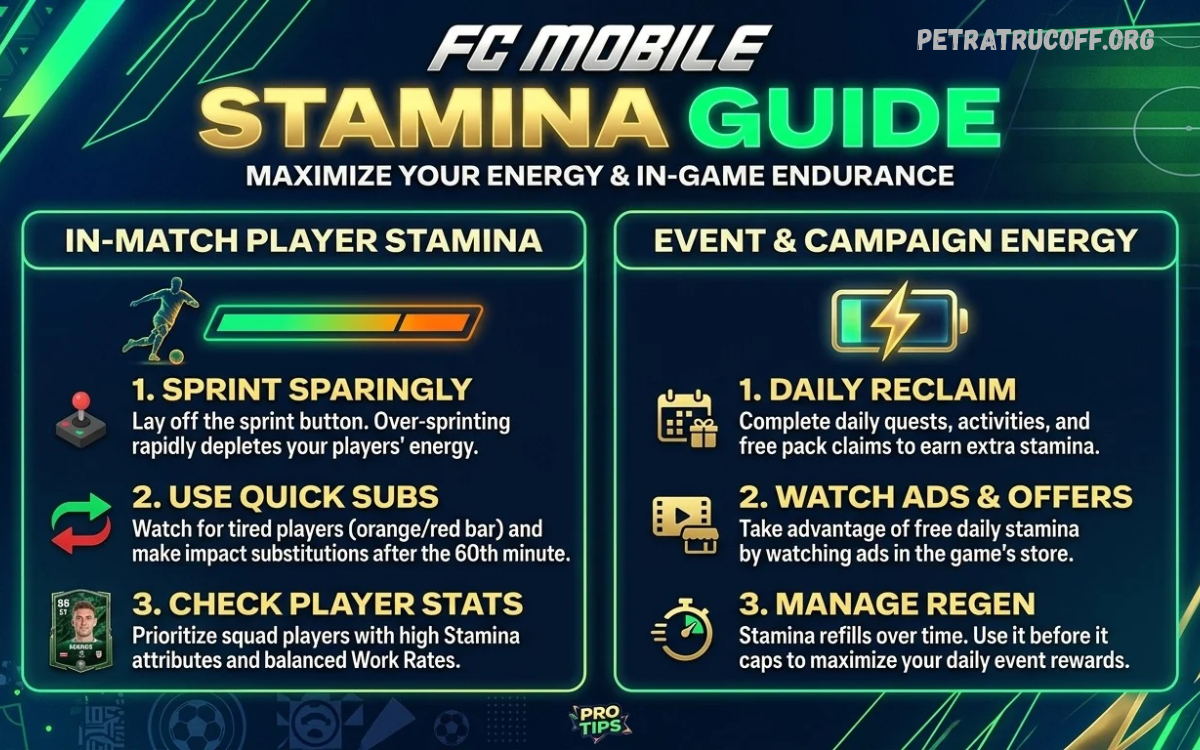
FC Mobile Stamina Guide helps players understand one of the most important aspects of football gameplay. Stamina affects player performance, movement, sprinting, positioning, and overall match control. Managing energy properly can make a noticeable difference during competitive matches.
Every player needs a balanced approach to stamina management. Constant sprinting, unnecessary movement, and poor substitutions can reduce player effectiveness. Understanding stamina mechanics helps maintain team performance throughout a match and supports smarter football decisions.
What Is Stamina in FC Mobile?
Stamina represents a player’s energy level during a football match. It determines how effectively players perform physical actions, including running, sprinting, pressing, and moving around the pitch. Players with sufficient stamina can maintain their activity more consistently.
In FC Mobile, stamina management plays an important role in different match situations. A midfielder covering large areas or a forward making repeated attacking runs may use energy faster. Understanding these differences helps players manage their squad more effectively.
Why Is Stamina Important in FC Mobile?
Stamina is important because football matches require continuous movement and physical activity. Players frequently change positions, chase opponents, support attacks, and defend dangerous situations. These actions can gradually reduce their available energy.
Low stamina can affect a player’s effectiveness during important moments. Tired players may struggle to maintain their usual movement and responsiveness. Proper energy management helps maintain team balance, especially during the later stages of competitive matches.
How Does the Stamina System Work?
The stamina system represents the physical energy available to each footballer during gameplay. Different actions place different demands on players, meaning energy consumption can vary according to match activity. Continuous sprinting generally requires more effort than ordinary movement.
Player positions also influence stamina requirements. Central midfielders often cover considerable distances, while defenders need energy for positioning and defensive movement. Understanding these responsibilities helps create a more effective approach to managing the entire squad.
Understanding Stamina Drain During Matches
Stamina decreases as players perform different physical actions throughout a match. Running, sprinting, pressing opponents, tackling, and using skill moves can increase energy consumption. Repeated high-intensity actions make it important to monitor player energy.
The amount of stamina consumed depends on player attributes and gameplay situations. EA has explained that stamina influences movement, with low stamina affecting acceleration and top speed. Players should avoid unnecessary physical actions when maintaining possession is a better option. EA SPORTS Official Site+1
Best Ways to Save Stamina in FC Mobile
The easiest way to preserve stamina is to avoid sprinting continuously. Sprint when creating an attacking opportunity, chasing an opponent, or escaping defensive pressure. Use normal movement during slower build-up situations to reduce unnecessary energy consumption.
Another useful strategy involves controlling possession through accurate passing. Instead of making repeated individual runs, move the ball between teammates and create space through intelligent positioning. This approach supports better teamwork and helps players avoid unnecessary movement.
Avoid Continuous Sprinting
Continuous sprinting is one of the habits players should control when managing stamina. Sprinting during every attacking movement can leave important players with limited energy before the final stages of a match. Use acceleration when the situation genuinely requires additional speed.
Normal movement is often sufficient when carrying the ball through midfield or approaching an opponent’s defensive area. Save sprinting for counterattacks, open spaces, defensive recovery, and important attacking opportunities. Balanced movement makes gameplay more controlled and predictable.
Choose the Right Players for Your Squad
Player selection has a direct influence on stamina management. Footballers with suitable stamina attributes can maintain their physical activity more effectively throughout matches. Check player statistics before building your starting eleven, especially for positions requiring frequent movement.
Central midfielders, attacking midfielders, and fullbacks often perform demanding roles during gameplay. Selecting players with balanced stamina, pace, and defensive attributes can improve overall squad performance. Avoid focusing exclusively on overall rating when comparing different footballers.
Best Stamina Management for Every Position
Different positions require different levels of physical activity. Defenders focus on positioning, marking, and stopping attacking movements, while midfielders connect defensive and attacking play. Forwards need energy for attacking runs, pressing, and finishing opportunities.
A balanced squad should contain players with attributes suitable for their individual responsibilities. Choosing appropriate substitutes for demanding positions also helps maintain team performance. Understanding positional requirements makes it easier to manage stamina without changing your entire playing style.
Stamina Management for Strikers
Strikers frequently make forward runs, chase through passes, and create scoring opportunities. These movements can gradually reduce their energy, especially when players repeatedly sprint toward the opponent’s goal. Controlled attacking movements help preserve stamina for important finishing situations.
Choose forwards with suitable stamina, acceleration, finishing, and positioning attributes. Avoid forcing every attacking opportunity through the same striker because teammates can provide additional attacking options. Rotating possession across the front line creates a more balanced attacking approach.
Stamina Management for Midfielders
Midfielders usually cover significant areas of the pitch because they participate in attacking and defensive situations. They receive passes, support forwards, track opponents, and help defenders maintain possession. These responsibilities make stamina particularly important for central midfield positions.
Select midfielders with balanced stamina, passing, defensive awareness, and physical attributes. Avoid unnecessary pressing when your team already controls the middle of the pitch. A well-organized midfield can maintain possession and reduce the need for repeated high-intensity movements.
Stamina Management for Defenders
Defenders need sufficient energy to maintain positioning and respond to dangerous attacking movements. Fullbacks may experience additional physical demands because they support attacks and return to defensive positions. Centre-backs generally focus more on positioning, marking, and stopping forwards.
Use controlled defensive movement instead of constantly chasing opponents. Good positioning can prevent unnecessary running and help defenders remain organized. Select substitutes who can cover defensive positions when starting players become tired during competitive matches.
Stamina Management for Wingers
Wingers depend on pace, acceleration, and movement to create attacking opportunities. Repeated sprinting, dribbling, and skill moves can consume significant energy during a match. Managing their activity helps preserve attacking effectiveness for important moments.
Avoid attempting to beat defenders through individual dribbling on every possession. Use short passes, overlapping teammates, and intelligent movement to create space. Fresh wingers introduced later can also provide additional attacking options against tired opposition.
Stamina Management for Goalkeepers
Goalkeepers have different physical responsibilities compared with outfield players. Their primary tasks involve positioning, saving shots, collecting crosses, and distributing the ball. Therefore, stamina management usually receives less attention when compared with midfielders or fullbacks.
When selecting a goalkeeper, consider important attributes such as reflexes, positioning, diving, and handling. Choose a suitable goalkeeper based on your defensive strategy rather than focusing only on stamina. Maintaining a strong defensive structure also reduces unnecessary pressure on your goalkeeper.
Best Time to Make Substitutions
Substitutions are important when starting players become tired or when the match requires a tactical adjustment. Replacing an exhausted midfielder or winger can introduce fresh movement and improve your team’s ability to compete during later stages. Watch individual stamina indicators throughout the match.
Do not wait until every player has extremely low energy before considering substitutions. Prepare your bench before kickoff and identify players who can replace demanding positions. A well-timed substitution can improve team balance and provide additional attacking or defensive options.
How to Prepare a Strong Substitute Bench
A useful substitute bench should include players who cover different positions and tactical responsibilities. Consider keeping an additional striker, midfielder, winger, and defender whenever your available squad permits. This arrangement provides flexibility when players become tired or tactical situations change.
Compare substitute attributes before adding them to your match lineup. Fresh players with suitable pace, stamina, passing, and defensive abilities can support different match situations. Avoid selecting substitutes based only on overall rating because positional suitability also matters.
How to Use the Substitution Menu
FC Mobile provides match-management options that allow players to prepare substitutes and make changes during supported matches. Set up your bench before starting a match and monitor the available substitution options during gameplay. Check the current interface because features can vary between game modes and updates.
EA previously documented a system supporting up to seven bench players and three match substitutions. Current availability and restrictions should be checked in the relevant game mode. Use substitutions thoughtfully instead of replacing players without considering their roles. EA SPORTS Official Site
Importance of the Stamina Attribute
The stamina attribute helps determine how effectively a footballer manages energy during gameplay. Players with suitable stamina ratings can maintain their physical activity more consistently. This makes stamina an important consideration when comparing footballers with similar attacking or defensive abilities.
However, stamina should not be the only factor when choosing players. Pace, acceleration, strength, positioning, passing, and other attributes also influence overall performance. A balanced combination of statistics usually creates a more reliable squad than focusing on one attribute.
How to Check Player Stamina
Checking player stamina helps you understand which footballers may need additional attention during a match. Observe the stamina indicators displayed around player information and within the substitution interface. These visual indicators help identify players who are losing energy.
You can also examine the player’s attributes through the available player information screens. Compare stamina ratings when deciding which footballers should start and which should remain on the bench. Regular monitoring makes squad management easier during difficult matches.
Read Also: Ultimate Roblox Guide for Beginners and Advanced Players
Understanding Low Stamina Effects
Low stamina can influence player movement and reduce effectiveness during important gameplay situations. According to EA’s gameplay explanations, exhausted players can experience reduced acceleration and top speed. Passing, shooting, and skill move effectiveness may also be affected under certain low-energy conditions. EA SPORTS Official Site+1
These changes become especially important during the final stages of a close match. A tired midfielder may struggle to recover possession, while an exhausted winger may find it harder to create separation from defenders. Monitoring stamina helps you recognize these situations before they affect your overall strategy.
Best Formations for Stamina Management
Formation selection can influence how much running different players perform during a match. Systems with balanced midfield coverage can reduce the need for individual players to cover excessive spaces. Choose formations that support your preferred passing style and defensive structure.
Consider formations such as 4-3-3, 4-2-3-1, and 4-4-2 when building a balanced team. Each formation offers different positional responsibilities, so player attributes and tactical preferences should guide your decision. No single formation guarantees lower stamina consumption in every match.
How Tactics Affect Stamina Consumption
Tactical decisions influence how players move across the pitch. Attacking approaches can encourage additional forward runs, while defensive approaches prioritize positioning and team organization. More aggressive pressing and movement can increase physical demands during gameplay.
EA’s Game Plans system introduced different mentalities, allowing players to adjust their team’s approach during supported matches. Ultra Attacking encourages more forward movement and can consume stamina faster. Balanced and defensive approaches provide alternative ways to manage team positioning. Game Plans Deep Dive+1
Using Balanced Mentality Effectively
Balanced mentality provides a useful starting point for players who want to maintain a combination of attacking and defensive responsibilities. It helps prevent unnecessary commitment toward one side of the pitch and supports organized team movement. This approach can be useful throughout ordinary match situations.
Use balanced tactics when protecting possession or controlling the middle of the pitch. You can adjust your strategy when chasing a goal or defending an advantage. Changing mentality according to the match situation helps avoid maintaining an unnecessarily aggressive approach.
When to Use Attacking Mentality
Attacking mentality can help create additional opportunities when your team needs a goal. More players may move forward, giving attackers extra passing options and supporting offensive pressure. However, this approach can leave additional space behind your defensive line.
Avoid maintaining an aggressive approach throughout an entire match without considering player energy. Use attacking tactics during situations that justify additional forward movement. Monitor your midfielders and defenders because increased team movement can create additional physical demands.
When to Use Defensive Mentality
Defensive mentality can help protect a lead or control the match when opponents apply significant pressure. Players focus more on maintaining their positions and protecting defensive spaces instead of making frequent forward runs. This approach can support more organized team movement.
Use defensive tactics when protecting an important advantage or managing a difficult final period. However, avoid becoming so defensive that your forwards receive no useful passing opportunities. Maintain a suitable balance between defensive stability and the ability to retain possession.
Game Plans and Stamina Management
Game Plans allow players to prepare different tactical combinations and change their approach during supported matches. Formation and mentality choices influence positioning, pressing, forward runs, and team width. These decisions can affect how much physical activity players perform.
Prepare different plans for attacking, balanced, and defensive situations. Use a suitable approach according to the scoreline and remaining match time. Remember that Game Plans have mode restrictions, so check their availability before relying on them during a particular match. Game Plans Deep Dive
How to Manage Stamina in Head to Head Matches
Head to Head matches require careful control because opponents can create unpredictable attacking and defensive situations. Constantly chasing the ball or sprinting toward every opponent can make players lose energy quickly. Maintain your defensive shape and use controlled movement whenever possible.
Focus on passing accuracy, positioning, and selecting the right moment to press. Avoid unnecessary skill moves when a simple pass can create a better opportunity. Keep your substitutes ready and monitor the stamina of important players during the match.
How to Manage Stamina in Division Rivals
Division Rivals matches can become challenging when opponents use aggressive tactics and quick attacking combinations. Maintaining energy throughout the match helps your players respond to changing situations. Avoid making unnecessary movements that expose your team to counterattacks.
Use balanced tactics during ordinary match situations and adjust your approach when necessary. Keep an eye on midfielders, fullbacks, and wingers because their responsibilities can require considerable movement. Smart substitutions can help maintain your team’s effectiveness.
Common Stamina Management Mistakes
One common mistake is using sprint continuously, even when players have enough space to move normally. Another mistake involves performing unnecessary skill moves and pressing opponents without a clear reason. These habits can reduce energy and make later gameplay more difficult.
Ignoring substitutions is another problem that affects team performance. Some players continue using exhausted footballers even when suitable replacements are available. Monitor stamina indicators, understand positional responsibilities, and make tactical adjustments whenever the situation requires them.
Best Tips to Improve Stamina Management
Developing good stamina management habits requires patience and consistent gameplay. Focus on maintaining possession, choosing appropriate movements, and avoiding unnecessary physical actions. These small improvements can help your squad remain organized during challenging matches.
Use the following practical tips:
- Avoid continuous sprinting.
- Make intelligent substitutions.
- Choose players with suitable stamina attributes.
- Use skill moves when necessary.
- Maintain balanced team positioning.
- Avoid unnecessary pressing.
- Monitor player energy regularly.
- Select suitable formations and tactics.
How to Build a Stamina-Friendly Squad
Building a stamina-friendly squad requires selecting footballers who can perform their assigned responsibilities effectively. Prioritize balanced attributes when comparing players and consider how frequently each position participates in attacking and defensive movements.
Include versatile substitutes who can cover multiple positions when possible. A balanced bench gives you additional flexibility during difficult matches. Remember that squad chemistry, player quality, tactical suitability, and individual attributes all contribute to overall team performance.
Frequently Asked Questions
What Is Stamina in FC Mobile?
Stamina represents a player’s energy during matches. It affects physical activities such as running, sprinting, pressing, and movement throughout gameplay.
Why Is Stamina Important in FC Mobile?
Stamina helps players maintain their performance during matches. Managing energy properly supports better movement, positioning, and overall team performance.
How Can I Save Stamina in FC Mobile?
Avoid continuous sprinting, unnecessary skill moves, and excessive pressing. Use normal movement and accurate passing to manage player energy.
Which Players Need More Stamina?
Central midfielders, fullbacks, and wingers often require considerable stamina because they cover large areas of the pitch and participate in attacking and defensive situations.
Does Low Stamina Affect Player Performance?
Yes. Low stamina can reduce acceleration and top speed. Exhausted players may become less effective during important attacking and defensive situations.
When Should I Substitute Players in FC Mobile?
Consider substitutions when important players become tired or when your tactics require fresh energy. Monitor stamina indicators and use available substitutes strategically.
What Is the Best Formation for Stamina Management?
Formations such as 4-3-3, 4-2-3-1, and 4-4-2 provide different positional responsibilities. Choose a formation that supports balanced movement and your preferred gameplay style.
Does Sprinting Reduce Stamina Faster?
Yes. Sprinting generally consumes more energy than normal movement. Use sprinting to create opportunities, chase opponents, or recover defensively.
How Can I Check Player Stamina?
Monitor the stamina indicators displayed during matches and available player information screens. These indicators help identify players who may need substitutions.
Can Tactics Affect Stamina Consumption?
Yes. Aggressive pressing, attacking movements, and frequent forward runs can increase physical demands. Balanced tactics and intelligent positioning can help manage player energy.
Conclusion
The FC Mobile Stamina Guide provides useful knowledge for players who want to improve their match management and squad performance. Understanding stamina consumption, player attributes, substitutions, formations, and tactical decisions helps create a more controlled playing experience.
Avoid unnecessary sprinting, maintain possession, and monitor player energy throughout every match. Select suitable substitutes and adjust your tactics according to the situation. Consistent stamina management can help you maintain better team balance and make smarter decisions in FC Mobile.
