

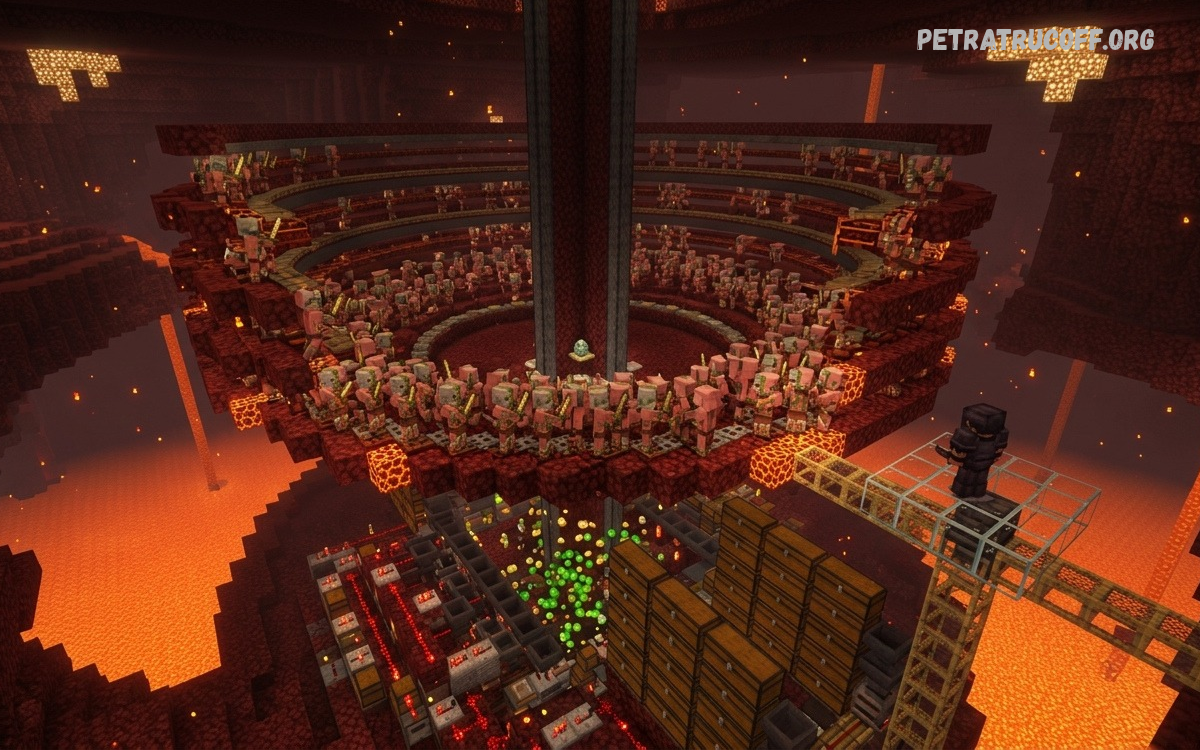
Minecraft Gold Farm Design helps players collect gold nuggets, gold ingots, and experience points without spending hours searching underground. A well-planned farm uses zombified piglins or Nether portals to produce valuable resources while you focus on other survival projects.
Gold is useful for crafting golden apples, powering powered rails, and trading with piglins. Building an efficient farm can also support large projects, improve resource management, and provide a renewable supply of materials for your Minecraft survival world.
What Is a Minecraft Gold Farm?
A Minecraft gold farm is a structure designed to generate gold-related drops by spawning zombified piglins and moving them toward a collection or killing area. Depending on the design, the farm can operate through natural spawning platforms in the Nether or through specially configured Nether portals.
Most farms combine three main systems: mob spawning, mob transportation, and item collection. Advanced designs may also include automatic sorting, experience collection, and storage, allowing players to gather resources with less manual work.
Why Build a Minecraft Gold Farm?
Mining gold ore can provide useful materials, but the supply depends on exploration, mining time, and available resources. A properly designed gold farm provides a repeatable source of gold while making it easier to prepare for large crafting projects and piglin bartering.
Gold farms can also provide experience when mobs are killed under suitable conditions. The best design depends on whether your main goal is collecting gold, gaining experience, building an easy survival farm, or creating a high-output technical structure.
Understanding Gold Farm Mechanics
Zombified piglins are the primary mobs used in many gold farms. They can spawn naturally in suitable Nether locations or appear through Nether portal mechanics, depending on the edition and farm design.
When zombified piglins reach the killing chamber, their drops can be collected through hoppers or other item-handling systems. Some designs prioritize automatic production, while others allow players to kill mobs manually for experience and additional drops.
Best Location for a Minecraft Gold Farm
Choosing the right location is an important part of Minecraft Gold Farm Design. For a natural-spawning farm, a Nether Wastes biome is a popular choice because it supports zombified piglin spawning and offers suitable space for large platforms.
Look for an area with enough room to build safely and connect the spawning platforms to a central collection chamber. Before construction, inspect nearby terrain and consider how surrounding spawnable spaces could affect the farm’s performance.
Minecraft Gold Farm Materials
Gathering the correct materials before construction makes the building process easier. Depending on your design, you may need magma blocks, building blocks, glass, trapdoors, hoppers, chests, slabs, and a sword for manual mob collection.
Portal-based farms require obsidian and suitable activation components, while advanced farms may use redstone devices and additional storage materials. Prepare extra blocks for temporary scaffolding, repairs, and protective barriers around important sections.
Simple Minecraft Gold Farm Design for Beginners
A beginner-friendly farm should focus on a straightforward spawning area, a safe mob path, and an accessible collection point. Start with a compact design that teaches you the basic mechanics before attempting larger technical builds.
Natural-spawning farms can be effective but may require more preparation than simple portal-based alternatives. Choose a tutorial that matches your Minecraft edition and exact game version, since the same structure may behave differently across editions.
Building a Natural-Spawning Gold Farm
Natural-spawning gold farms use platforms in the Nether where zombified piglins can appear. The platforms direct mobs toward a central opening, allowing gravity, carefully positioned blocks, or mob attraction mechanics to move them toward the collection chamber.
For better performance, consider the surrounding spawnable areas and the farm’s distance from other locations where hostile mobs can appear. Efficient designs reduce competition for available mob spawns and concentrate activity around the intended platforms.
Choosing the Right Spawning Platforms
Spawning platforms form the foundation of many advanced gold farms. Java Edition designs commonly use magma blocks because zombified piglins can spawn on them, and they resist fire damage.
Platform size, spacing, height, and surrounding blocks influence how efficiently a farm operates. Start with a tested design rather than randomly expanding platforms, because poorly planned dimensions can create transportation problems and reduce the benefits of additional building materials.
Using Magma Blocks in Gold Farms
Magma blocks are popular in Nether gold farms because they suit the environment and allow zombified piglins to spawn. They also provide a distinctive surface that makes it easier to identify the intended spawning areas during construction.
Plan the platform layout before placing hundreds of blocks. Confirm that every platform connects properly to the collection system and that the chosen design accounts for nearby terrain, mob movement, and the version-specific spawning rules.
Using Trapdoors to Guide Mobs
Trapdoors can help guide zombified piglins toward openings in certain farm designs. Correctly positioned trapdoors create the appearance of a walkable surface, encouraging mobs to move toward a drop or transportation channel.
Their placement must match the specific design being followed. Test a small section before completing the entire structure, and verify that mobs fall into the intended route instead of wandering around the platforms.
Designing an Efficient Mob Collection Chamber
The collection chamber is the central point where zombified piglins gather after leaving the spawning platforms. A good chamber keeps mobs contained while providing convenient access to the drops and experience generated by the chosen killing method.
Build protective walls around exposed edges and leave enough room for the collection mechanism to function. A poorly designed chamber can allow mobs to escape, interfere with transportation, or create unnecessary maintenance work during longer farming sessions.
Manual Killing Versus Automatic Collection
Manual-kill farms allow players to defeat zombified piglins themselves, often using an appropriately enchanted sword. This approach can provide experience and increase gold collection compared with some automatic methods, depending on the design and game mechanics.
Automatic farms focus on moving mobs through a system that collects their drops with minimal player interaction. However, some automatic killing methods don’t provide experience, so choose a design based on your main goal rather than assuming every farm offers the same rewards.
Minecraft Gold Farm Design for Java Edition
Java Edition gold farms commonly use natural-spawning platforms in the Nether. Many designs combine magma blocks, mob attraction, carefully controlled movement, and a central killing chamber to generate a steady supply of gold-related drops.
Advanced Java farms can get complicated because spawning efficiency depends on the surrounding area and mob-cap conditions. Beginners should build a tested, smaller structure first, then consider more elaborate platforms after confirming the basic farm works.
Minecraft Gold Farm Design for Bedrock Edition
Bedrock Edition supports different gold farm approaches, including portal-based designs. Some Bedrock farms use rapid portal activation and deactivation to generate zombified piglins, then collect them and transport them to a killing area.
Do not assume a Java Edition tutorial will work unchanged in Bedrock Edition. Mob behavior, redstone timing, spawning mechanics, and technical details can differ, so choose a Bedrock-specific design and check its compatibility with your installed version.
Building a Portal-Based Gold Farm
Portal-based farms use Nether portals in the zombified piglin spawning process. These designs can be useful when natural-spawning farms are impractical, but their performance depends on edition-specific mechanics and the way portal activation is controlled.
Before building, identify the required portal dimensions, activation components, transportation path, and collection method. A tested design helps you avoid costly construction errors and ensures each component works with the intended game edition.
Planning the Redstone System
Redstone components can automate portal activation, item movement, and selected collection tasks. Depending on the design, you may need observers, dispensers, repeaters, redstone dust, or other components to coordinate the farm’s operation.
Keep redstone circuits accessible for troubleshooting, and avoid placing important components where theyare hard to inspect. Test each circuit separately before connecting it to the full farm, especially when timing controls the activation of Nether portals.
Designing a Reliable Item Collection System
A useful gold farm should collect valuable drops without letting them disappear or pile up in inaccessible locations. Hoppers connected to chests are a common way to gather items from a controlled collection area.
Arrange storage so you can easily retrieve the most important resources. Check hopper connections, chest capacity, and item flow before leaving the farm running, because a blocked collection system can waste valuable drops and interrupt production.
Adding Automatic Item Sorting
An item sorter can separate gold nuggets, rotten flesh, and other drops into dedicated storage areas. This makes a larger farm easier to manage and helps you locate useful materials without repeatedly searching through mixed chests.
Begin with basic storage before adding a complex sorting system. Once the farm works reliably, expand the design with appropriate filters and overflow protection to ensure unwanted items don’t block the collection line or fill every available container.
Improving Gold Farm Efficiency
Farm efficiency depends on several factors, including spawning conditions, transportation speed, collection capacity, and the selected killing method. Improving one component may not yield major benefits if another part of the farm remains the main bottleneck.
Measure the resources collected over a consistent period instead of relying on estimates from unrelated tutorials. Compare results under similar conditions, and make changes one at a time so you can identify which improvements genuinely help.
Understanding AFK Gold Farming
AFK farming means leaving your character in a suitable position while the farm keeps running. Whether this works depends on the game’s design, the player’s distance from the farm, simulation settings, and how the game handles nearby entities.
Choose a safe and tested standing location that keeps the necessary farm components active. Check storage capacity and mob movement before leaving the character unattended, and remember that server settings or multiplayer rules may limit how long the farm remains productive.
Read Also: pg slot เว็บตรงไม่ผ่านเอเย่นต์ คืออะไร เล่นยังไงให้ปลอดภัย
Experience Farming With Gold
Some gold farm designs are built to generate both gold and experience. When the selected killing method awards experience, players can use the farm to replenish experience levels for enchanting, repairing equipment, and other survival activities.
An automatic design may collect gold efficiently but provide little or no experience through its killing system. If experience is important, choose a tested player-kill design and confirm its behavior in your edition before investing in a large structure.
Common Minecraft Gold Farm Design Mistakes
One frequent mistake is building a farm from a tutorial intended for a different edition or version. Another is overlooking the surrounding terrain, leaving gaps in mob pathways, or building a collection chamber that cannot handle the number of mobs it produces.
A second common problem is adding advanced components before testing the basic structure. Build in stages, check each section as you go, and keep a copy of the original design so you can compare your build to the intended layout.
Fixing Low Gold Production
Low production can result from inefficient spawning conditions, slow transportation, nearby spawnable spaces, or a malfunctioning item collection system. Start by observing where mobs appear, how they move, and whether their drops reach the storage area.
Avoid rebuilding the entire farm before identifying the cause. Test the spawning platforms, transportation route, killing chamber, and collection system separately, then compare the results with the tutorial’s expected behavior for your particular edition.
Preventing Mob Escapes
Mob escapes can occur when walls are incomplete, openings are positioned incorrectly, or transportation routes don’t guide mobs as intended. Inspect corners, drop shafts, platform edges, and the entrances to the collection chamber for possible gaps.
Use solid barriers and follow the dimensions specified in your chosen design. If a farm allows mobs to move through portals, also consider how the portal destinations are connected and whether returning mobs could interfere with normal operation.
Protecting Your Gold Farm
Safety should be part of every Minecraft Gold Farm Design, particularly when the structure is located in the Nether. Build secure walkways, protect exposed edges, and keep your main access route away from dangerous drops and nearby lava.
Carry appropriate equipment when constructing or repairing the farm, and keep valuable items stored safely before testing unfamiliar mechanisms. A stable structure with accessible maintenance paths is easier to use than a complicated farm built without considering player safety.
Turning Gold Nuggets Into Ingots
Many gold farms collect gold nuggets rather than producing only complete ingots. In Minecraft, nine gold nuggets can be crafted into one gold ingot, making nugget storage an important part of the resource-processing workflow.
Organize the collection chests so nuggets remain easy to access and convert. You can then use the resulting ingots for crafting, piglin bartering, or other projects, depending on the resources and gameplay goals of your survival world.
Using Gold for Piglin Bartering
Gold has an additional use in the Nether because piglins can barter when given gold ingots under the appropriate conditions. A gold farm can therefore support a wider resource system, especially when you want to obtain useful items through repeated trading.
Keep bartering separate from the gold farm’s mob collection area to avoid mixing the two processes. Store a portion of your ingots for crafting and trading, and reserve enough materials to support future building projects.
Maintaining Your Minecraft Gold Farm
Regular maintenance helps keep a gold farm operating as intended. Check storage capacity, hopper connections, redstone components, and mob pathways whenever production slows or items stop reaching the collection chests.
For advanced builds, keep notes about the design and any changes you make. This record can help you identify problems after a game update, restore a working configuration, or improve the farm without repeating the entire construction process.
Expanding a Gold Farm for Larger Projects
Once a smaller farm works reliably, you may want to increase its output by expanding the spawning area or improving the transportation system. Expansion should follow the original design’s logic rather than simply adding more platforms wherever space is available.
Consider the extra materials, construction time, and maintenance required before upgrading. A larger farm isn’t automatically more efficient, especially when spawning conditions, mob limits, or collection capacity prevent the extra structure from reaching its full potential.
Choosing the Best Minecraft Gold Farm Design
The best design depends on your edition, available resources, technical experience, and intended results. Beginners may prefer a simple, easy-to-build farm, while experienced players may choose a larger system designed for gold production and experience.
Before selecting a tutorial, check its edition, version, material requirements, construction difficulty, and reported output. Prioritize designs that explain the underlying mechanics, because understanding how the farm works makes future troubleshooting and upgrades much easier.
Frequently Asked Questions
What Is the Best Minecraft Gold Farm Design?
The best design depends on whether you play Java Edition or Bedrock Edition and whether you prioritize gold, experience, or simplicity. Choose a tested farm that matches your version, available materials, and technical building experience.
Can You Build a Gold Farm in the Overworld?
Yes, some gold farms use Nether portals in the Overworld to generate zombified piglins. However, portal mechanics and efficiency differ between editions, so choose a design specific to your version of Minecraft.
Which Blocks Are Best for Gold Farm Platforms?
Magma blocks are commonly used in natural-spawning Nether gold farms, particularly in Java Edition designs. Portal-based farms require different construction materials, so follow the material list for the specific farm you intend to build.
Does a Gold Farm Give Experience?
Some designs provide experience when players kill zombified piglins themselves or when the killing system meets the game’s experience-drop conditions. Fully automatic designs may prioritize item collection instead, so verify the mechanics before building.
Why Is My Minecraft Gold Farm Not Working?
Common causes include incompatible game versions, incorrect spawning platforms, incomplete mob pathways, faulty redstone, or blocked item collection. Check each component individually and compare your structure with a reliable tutorial for your edition.
How Can I Improve Gold Farm Output?
Start by checking spawning conditions, transportation speed, and storage capacity. Make controlled improvements based on observed performance instead of expanding the structure immediately, since the largest farm is not always the most efficient.
Is a Gold Farm Useful in Survival Mode?
Yes, a gold farm can provide resources for crafting, piglin bartering, and other projects. A simple, reliable design can be particularly helpful in long-term survival worlds where renewable materials reduce the need for repeated mining.
Can Java and Bedrock Use the Same Gold Farm?
Not every design works in both editions because mob spawning, portal mechanics, and redstone behavior can differ. Always confirm edition compatibility and the supported game version before gathering materials or starting construction.
Conclusion
A Minecraft Gold Farm Design can help you build a renewable gold supply while teaching you more about mob spawning, redstone, transportation, and automated storage.
Start with a manageable design, test every component, and improve the structure as your survival world develops. Choose a compatible tutorial and maintain the farm regularly to create a practical resource system for crafting, trading, and long-term Minecraft projects.

1 comentario
Pingback: Minecraft Village Trading System: Complete Trading Guide - PetraTrucoff