

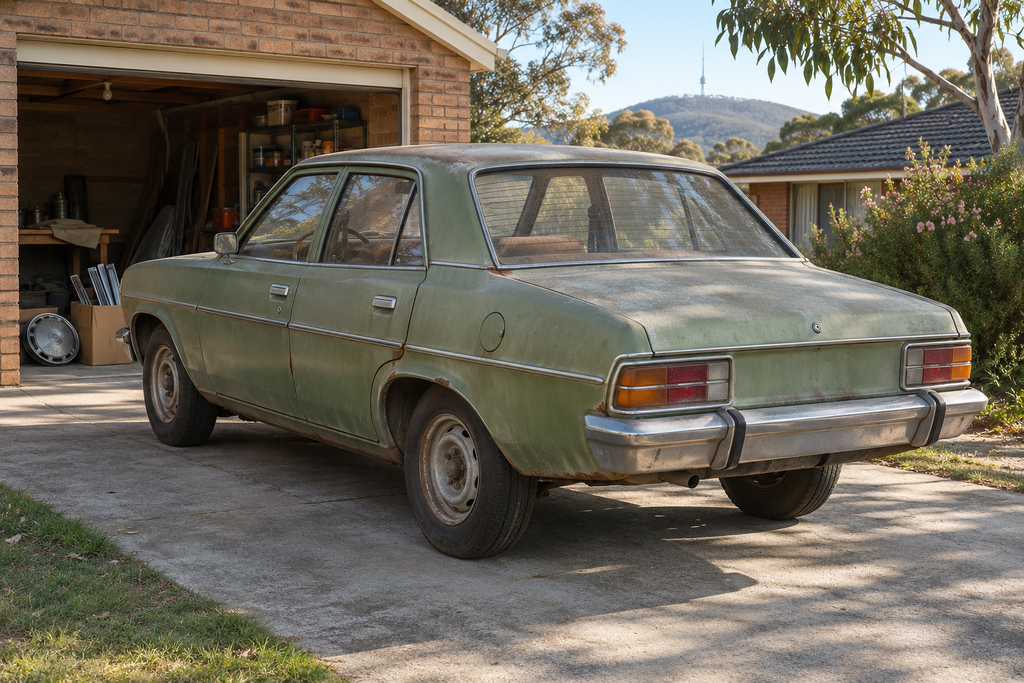
“It ran when I parked it” may be true and still tell you very little about collecting a project car. A sedan with a dead engine, four tyres holding air and a clear driveway is one job. The same sedan behind a locked gate, with a seized rear wheel and its gearbox sitting beside it, is another. Before paying a deposit or promising a collection time, establish three things. Can the seller release this particular car? How will it come out of the property? Where will it sit once it is yours?
Start with the car’s identity
Read the vehicle identification number (VIN), or the chassis number on an older vehicle, from the car and compare it with the seller’s paperwork. A clear photo helps when you run the number later. If an identifier is missing, unreadable or different from the one in the advert, resolve that before paying. A folder of restoration receipts can help you understand the project, but it cannot explain a mismatch between the paperwork and the shell in front of you.
Use the Australian Government’s Personal Property Securities Register (PPSR) on the day you buy or the day before. A vehicle search can reveal a registered security interest and may return stolen or written-off information where available. Keep the certificate and check the number you searched. The register does not identify the owner. If the person selling is a relative, tenant or workshop employee, establish who has authority to sell the car and who will release it to the driver.
Once those details line up, send your Canberra Towing enquiry with the pickup suburb, the delivery suburb and photos of the actual car where it stands. A close-up from the advert might show excellent paint. The photo a tow operator needs is the one that also shows the wheels, the slope and the route out to the street.
Inspect it as a car that has to move
Ask when the vehicle last rolled, whether the steering unlocks with the available key, and whether the transmission can be put in neutral. Ask about the handbrake separately. A car can be in neutral with its parking brake stuck on. If the seller cannot confirm any of this, record it as unknown. Nobody needs to push a heavy car down a sloping driveway to give the dispatcher a better answer.
Walk around the car while it is stationary. Look for absent wheels, tyres off their rims, bodywork hanging below the sill and parts resting under the car. Tell the operator if it is on stands or if the front suspension is missing. Ask for a collection plan before anyone dismantles or reassembles something to make the car easier to load. A shell may weigh less than a complete car and still take considerably more work to move.
If the project is electric, give the exact model and tell the driver whether the low-voltage system powers up. Find the manufacturer’s transport instructions for that model. The issues involved in towing an electric vehicle include electronic parking locks and restrictions on which wheels may turn during transport. Flag an EV conversion explicitly, since the original car’s handbook may describe a drivetrain that is no longer fitted.
Photograph the route out of the property
Stand at the street and photograph the entire approach, then take another picture looking back from the car. Include the gate opening, slope, tight corners, overhanging structures and where the truck might stand. A garage can fit a project car with room to spare while leaving too little working space in front of it to load. If the car sits behind another vehicle, confirm who has the key to move that vehicle on collection day.
According to Joshua Harrison, founder of Underground Towing & Salvage, “Underground recoveries require the right equipment, planning and experience.” His team has collected vehicles from Canberra apartment basements and commercial car parks. For a buyer looking at a project in a shared garage, the posted entrance height is a starting point. A photo of the ramp, overhead pipes and the turn into the bay helps the operator assess the rest of the route.
Decide what travels with the car
Lay the loose parts out with the seller before settling on a price. Record the engine or gearbox if it is out of the vehicle, spare wheels, seats, glass, trim and boxes of fasteners. Photograph what is included and give both parties a copy. If a donor bonnet is leaning against a wall, establish whether it belongs to this sale. It is a much easier conversation to have in the garage than after the seller has handed over the keys.
Send that inventory to the operator and establish which items they can carry. A loose gearbox needs its own handling and restraint arrangements. A windscreen or a set of freshly painted panels may be better collected separately. Agree who will prepare the parts and who will bring any necessary equipment. Leave time to make another arrangement if the operator agrees to transport only the vehicle. Never assume everything can ride loose in the boot.
Price the delivery all the way into your driveway
Show the operator where the car will end up. A truck might reach the kerb outside your house yet have no workable angle to place a non-running car inside your garage. Check the driveway gradient, turn from the street, garage door height and room to unload. Tell the driver which way the car needs to face if you plan to work on the engine or need to leave another parking space accessible.
For example, a buyer collecting a sedan from a shed in Mitchell might want it nose-first in a Belconnen garage. If the seller says a rear wheel is locked, pass that on when asking whether the operator can place it in the requested spot. Get a quote that covers the agreed loading and unloading, and ask what would change it. You can then compare the full cost of that project with another one that rolls freely.
Put the handover in writing
Get a dated receipt identifying the vehicle, agreed price, buyer and seller, with a list of any major parts included. Give the seller the driver’s collection window and agree who will be on site with keys and gate access. If you cannot attend, tell the operator who can authorise release and give the seller the operator’s name. Take condition photos before loading, including fragile trim or damage you have already accepted.
Before the driver sets off, confirm that the person receiving the project has cleared the agreed space. Once it arrives, compare the delivered items with the inventory while the collection is still fresh in everyone’s mind. The restoration can take as long as it needs. A careful handover means you start it with the right shell, the parts you bought and a car you can actually reach to work on.
