

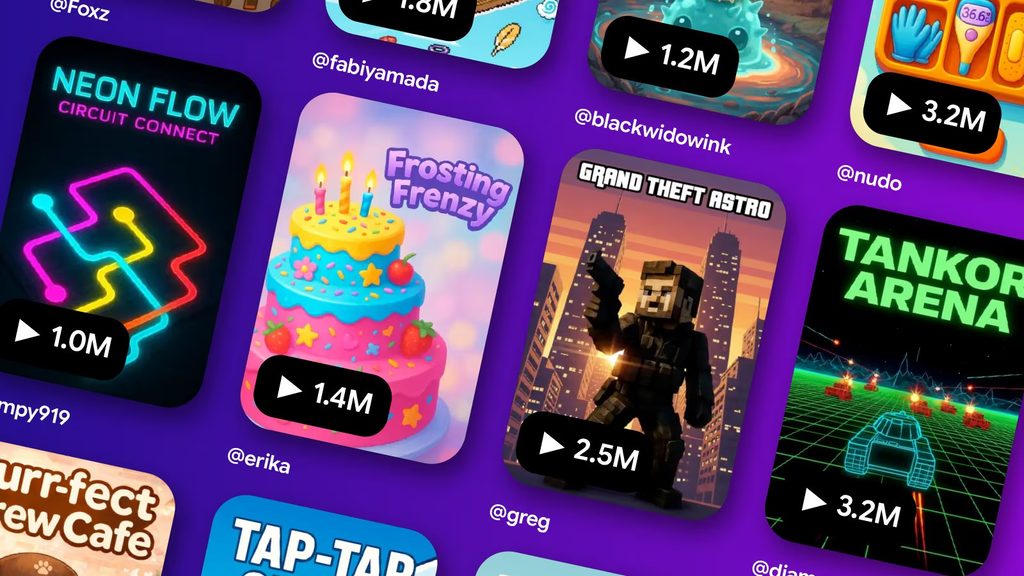
Most people still think of game development as something that happens inside massive studios, behind closed doors, by teams of engineers with Computer Science degrees. That picture is not just outdated. It is being actively dismantled by a wave of independent creators who are building games, publishing them to audiences of millions, and earning real income without ever stepping inside a traditional studio. The new creator economy in gaming runs on different rules, different tools, and a fundamentally different relationship between imagination and execution. If you have ever wanted to understand where this is all heading, and what it means for anyone who wants to make your own game, now is the time to pay attention.
Why the Old Gatekeepers No Longer Control Who Gets to Build
For most of gaming history, the barrier between having a game idea and shipping that game was enormous. You needed a team, a budget, a publisher, and years of development time. The result was an industry where only a small number of organizations could produce and distribute games at any meaningful scale.
That barrier has collapsed. Platforms built around user-generated content have transformed the economics of game creation from the ground up. Between March 2024 and March 2025, Roblox paid out over $1.1 billion to its creator community through its Developer Exchange program, a 31% increase from the prior year. Fortnite’s creator ecosystem distributed $352 million in 2024 alone, with Epic introducing in-island transactions in December 2025 that allow creators to keep up to 100% of revenue from items they sell. Combined creator payouts across major platforms exceeded $1.5 billion in 2025.
These are not grants or sponsorships. They are market earnings paid to people who decided to create a game and found an audience for it. One-third of those Roblox creators had no formal training in programming or design before they started.
The AI Game Maker Is Rewriting What Skill Means
Traditionally, building a game required mastery across multiple disciplines simultaneously: programming, art, animation, sound design, level design, and narrative writing. Even talented people with strong creative vision often could not ship a game because they lacked one or two of those technical skills.
The rise of the AI game maker has begun to dissolve that problem. AI tools now handle substantial portions of the work that once required dedicated specialists. Asset generation, code assistance, texture creation, dialogue scripting, and bug detection are all areas where AI is compressing what used to take weeks into hours. A Google Cloud survey found that 90% of game developers now integrate AI into their workflows, and 97% believe generative AI is reshaping the industry.
For independent creators, this is not a small convenience. It is a fundamental shift in what one person or a small team can realistically build and ship. The creative vision still comes from the person. The AI handles more of the execution. That combination is producing games that would have been impossible for solo creators just a few years ago.
What a No-Code Game Maker Actually Changes
The phrase «no-code» gets thrown around so often that its real significance gets lost. A no-code game maker is not a simplified toy for people who cannot handle real development. It is a complete rethinking of how game logic gets expressed, tested, and shipped.
Instead of writing code, creators work with visual interfaces, drag-and-drop logic systems, pre-built behavior blocks, and event-based rules. The game still runs on real underlying systems. The creator just interacts with them through a different layer. What this enables, practically speaking:
- Faster prototyping: Ideas that once took weeks to test can be playable in days or hours, which means creators iterate more and waste less time on concepts that do not work
- Lower skill ceiling for entry: Artists, storytellers, and designers who never learned to code can now build and ship fully functional games
- More time on creativity: Without debugging syntax errors or managing dependencies, creators spend more of their time on the parts of game design that actually matter to players
- Browser-based access: Many modern no-code platforms run entirely in a browser, meaning no installation, no hardware requirements, and no gatekeeping based on what machine you own
The success of Citizen Sleeper 2, created by a solo developer using visual scripting with no traditional coding, showed that no-code is not a limitation. It is a legitimate path to commercially and critically successful work.
Drone Attack: What Experience-First Design Looks Like in Practice
Understanding the creator economy is one thing. Seeing what it produces is another. Drone Attack on Astrocade is a strong example of what happens when a creator focuses entirely on a specific experience rather than trying to check every conventional game design box. It is a 3D drone piloting game built around navigating a detailed neighborhood environment with full control over the drone’s movement. There are no elaborate menus, no story cutscenes, and no onboarding tutorials that drag on. The game simply puts you in control of something people genuinely find fascinating, drone flight, and gives you the space to explore it. That clarity of purpose is something every aspiring game creator should study. The most compelling games in the creator economy rarely try to do everything. They identify one experience worth having and execute it cleanly. Drone Attack does that, tapping into the cultural momentum around drone culture and aerial exploration in a way that feels both timely and immediately playable.
Game Builder Platforms and the Infrastructure Behind the Economy
The creator economy does not run on individual tools alone. It runs on ecosystems. A game builder platform at its best does more than give creators a way to make games. It provides distribution, a built-in audience, monetization rails, community tools, and feedback loops that help creators understand what is working and what is not.
This infrastructure is what separates building a game in isolation from building a game within a thriving creator economy. When platforms succeed at this, they attract more creators, which generates more content, which draws more players, which creates more monetization opportunity, which attracts more creators. The flywheel effect is real and it is why platforms like Roblox now have 400 million monthly active users and over 2.7 million active creators.
For anyone looking to build a game today, choosing the right platform matters as much as the game itself. The platform determines your audience reach, your monetization ceiling, your available tools, and the community context your game launches into.
Making Games Has Never Been More Accessible, But Strategy Still Matters
Accessibility is one of the defining characteristics of the current era of making games. The tools are cheaper, more capable, and easier to learn than at any point in history. That is genuinely good news. But accessibility also means the field is more crowded than ever before. Over 20,000 games launched on Steam in 2025. AI tools are accelerating the pace further.
In that environment, the creators who succeed tend to share a few characteristics that have nothing to do with their tools:
- Specificity: They build for a clearly defined experience or audience rather than trying to appeal to everyone
- Iteration speed: They ship early, gather real feedback, and improve rapidly rather than perfecting in private
- Community presence: They build relationships with potential players before launch, not after
- Distinctive identity: Their games have a point of view, a tone, or a visual style that is recognizably theirs
- Platform alignment: They understand the audiences and conventions of the platform they are building on
These habits matter because they determine whether a game finds its audience, not whether it gets made. Getting it made is the easier problem now.
The Game Maker Online Opportunity Nobody Talks About
When most people think about making money from games, they picture either getting hired by a studio or going through the long road of Steam publishing. The game maker online ecosystem represents a third path that remains underappreciated outside creator circles.
Browser-based and platform-native games can reach players instantly, without installation friction, and within ecosystems that already have massive built-in audiences. A game made on a platform like Astrocade can be discovered by players who never would have found a standalone Steam release. The monetization model is different, but so is the barrier to reaching people. For many independent creators, especially those just starting out, this path offers the fastest feedback loop and the lowest risk of making something nobody ever plays simply because they could not find it.
Create Game First, Perfect It Later
One of the most counterproductive habits in independent game creation is waiting until everything is polished before showing anyone. The creator economy runs on a different rhythm. The most successful platform creators tend to create game concepts early, test them with real users, and build in public rather than in secret.
This approach has practical advantages that compound over time. Early players become invested in the game’s development. Feedback shapes decisions before they become expensive to reverse. Community forms around an experience before it is finished, which means launch is not the beginning of finding an audience but a milestone within an already growing one.
The cultural shift this represents is significant. Game creation used to be something you did privately until you were ready to show the world. In the creator economy, the process of creating is itself part of what players and followers engage with.
The Bigger Economic Picture
The numbers behind the gaming creator economy are not small. The market was valued at $28.6 billion in 2024 and is projected to reach $230.4 billion by 2034, growing at 23.2% annually. The AI in gaming segment is growing even faster, projected to reach $81 billion by 2035. Half of all game developers now self-fund their projects. Indie and solo development are rising as talented people choose independence over the uncertainty of studio employment.
What this means for anyone who wants to make your own game is that the timing has rarely been better. The tools are accessible, the platforms are mature, the audiences are enormous, and the financial precedents set by successful independent creators prove the model works. The biggest risk now is not building something that cannot succeed. It is waiting too long to start.
The Creator Economy Rewards Those Who Show Up
The new creator economy inside gaming does not come with guarantees. It rewards specificity over generality, consistency over perfection, and action over endless planning. The platforms exist. The tools exist. The audiences exist. The only thing the ecosystem cannot provide is the decision to start.
For anyone who has carried around a game idea without knowing how to act on it, the message from the current creator landscape is clear. The barriers that once made that idea impossible to pursue are largely gone. What remains is the creative work itself, and that has always been the part worth doing. Whether you are exploring a no-code game maker, experimenting with an AI game maker, or diving into a full game builder platform, the infrastructure is waiting. The only question is what you are going to build with it.
