

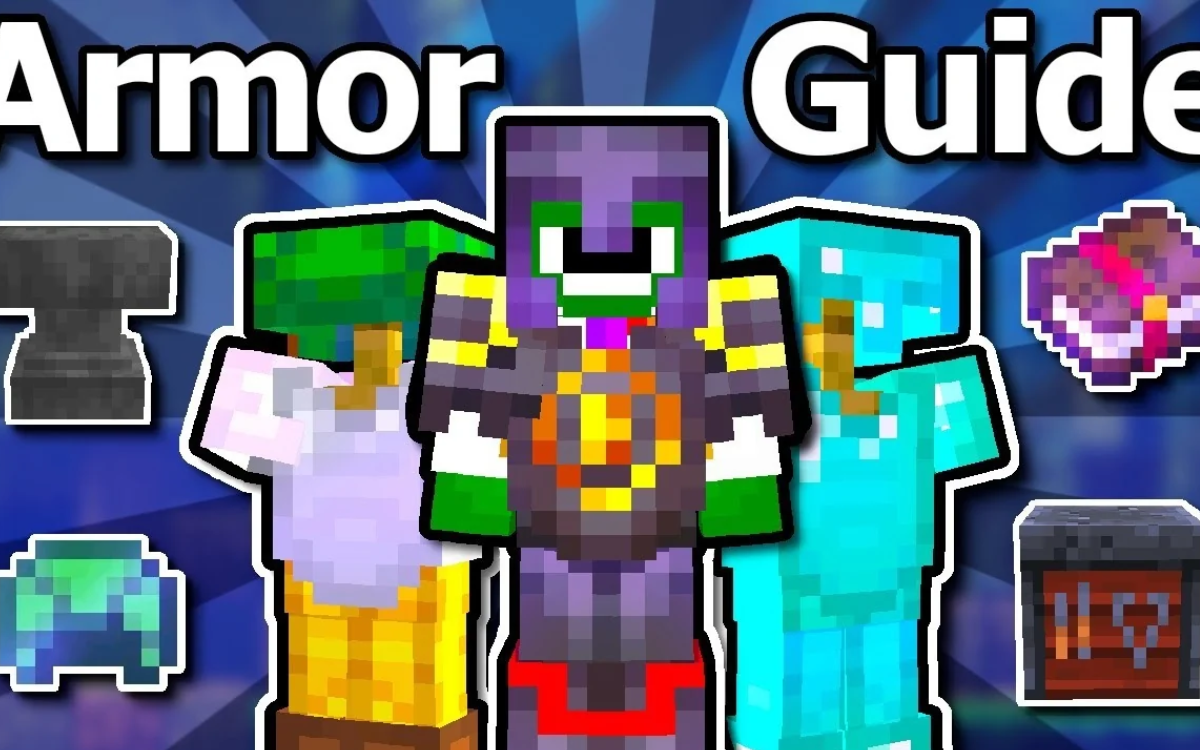
Minecraft armor plays an important role in protecting players against hostile mobs, environmental dangers, and unexpected combat situations. Choosing suitable armor improves survival, supports exploration, and provides better protection during challenging adventures.
This Minecraft Armor Guide explains different armor types, materials, protection levels, enchantments, and upgrade options. Whether exploring caves, fighting powerful enemies, or building survival bases, understanding armor mechanics helps players make smarter equipment choices.
What Is Armor in Minecraft?
Armor represents protective equipment designed to reduce incoming damage during gameplay. Players can equip four armor pieces: helmet, chestplate, leggings, and boots, with each piece providing different defensive benefits.
Armor becomes especially important during survival adventures, dangerous cave explorations, and combat encounters. Better materials generally provide stronger protection and improved durability, allowing players to survive more challenging situations.
Different Types of Minecraft Armor
Minecraft features several armor categories based on crafting materials and defensive strength. Leather, gold, chainmail, iron, diamond, and netherite represent the main traditional armor materials available in standard survival gameplay.
Each armor type offers different advantages involving durability, protection, appearance, and accessibility. Choosing the right gear depends on available resources, current progression, gameplay objectives, and personal preferences.
Leather Armor
Leather armor represents one of the earliest protective equipment options available in Minecraft. Players can craft helmets, chestplates, leggings, and boots using leather obtained from cows and other suitable sources.
Its defensive capabilities remain relatively limited compared with stronger materials. However, leather armor supports early survival progression and offers customization through dyeing, creating different appearances for individual armor pieces.
Gold Armor
Gold armor looks attractive and offers moderate protection compared with basic leather equipment. Players can craft gold armor using gold ingots collected through mining, exploration, and resource processing.
Golden equipment generally has lower durability than several alternative armor materials. However, gold armor provides a special advantage in the Nether because wearing at least one golden armor piece prevents ordinary piglins from becoming hostile solely because of unprotected presence.
Chainmail Armor
Chainmail armor features a distinctive metallic appearance and provides protection between leather and iron equipment. Players generally obtain chainmail through certain mob drops, trading opportunities, and other gameplay rewards rather than ordinary crafting.
Its defensive performance makes it a useful alternative during specific survival situations. However, limited availability and relatively modest durability often make iron armor a more practical long-term investment.
Iron Armor
Iron armor represents one of the most popular choices during early and middle survival progression. Players can obtain iron ingots through mining iron ore, processing raw iron, and collecting suitable resources.
Iron equipment offers dependable protection, reasonable durability, and accessible crafting requirements. A complete iron armor set provides a substantial defensive improvement compared with leather and gold alternatives.
Diamond Armor
Diamond armor delivers excellent protection and durability, making it a valuable milestone in Minecraft survival progression. Players obtain diamonds through underground mining, generated structures, and other resource opportunities.
A complete diamond set offers strong defensive capabilities against many ordinary threats. Players can also improve its performance through enchantments and eventually upgrade the equipment into netherite armor.
Netherite Armor
Netherite armor represents the highest traditional armor tier in Minecraft. Players upgrade diamond equipment using netherite ingots and the appropriate smithing template through a smithing table.
Netherite equipment offers improved durability, knockback resistance, and greater toughness compared with diamond armor. Its additional fire resistance property helps dropped netherite items survive lava, making it especially valuable during dangerous Nether adventures.
Minecraft Armor Protection Levels
Armor protection depends on the material and equipment combination selected by the player. A complete set generally offers better defensive coverage than wearing only one or two individual pieces.
Minecraft uses armor points and additional damage-reduction mechanics to determine incoming damage. Armor toughness also influences protection against stronger attacks, making advanced materials particularly useful during demanding encounters.
Understanding Armor Points
Armor points represent an important defensive statistic displayed through the player’s equipment interface. Different armor pieces contribute specific armor values, which combine into an overall protection rating.
A complete diamond or netherite armor set provides 20 armor points. However, armor points alone do not explain every defensive mechanic, because toughness, enchantments, and incoming damage also influence survival.
Armor Toughness Explained
Armor toughness helps reduce the effectiveness of powerful attacks against heavily equipped players. This statistic becomes especially valuable when facing enemies capable of dealing substantial damage through individual hits.
Diamond and netherite armor provide additional toughness compared with several lower-tier materials. Understanding this mechanic helps players recognize why advanced equipment performs better during difficult combat situations.
How to Craft Minecraft Armor
Crafting armor requires specific materials and access to a crafting table. Each equipment piece follows its own crafting arrangement, allowing players to create helmets, chestplates, leggings, and boots separately.
Before crafting a complete set, collect enough materials for all four pieces. Preparing resources beforehand saves time and ensures consistent protection during exploration and survival activities.
Helmet Crafting Guide
Helmets protect the player’s head and contribute to the overall armor rating. Most traditional helmets require five units of the selected crafting material, arranged in a helmet-shaped pattern.
Players can craft helmets using leather, gold ingots, iron ingots, or diamonds. Each material provides different defensive properties, while additional enchantments can improve underwater exploration and general protection.
Chestplate Crafting Guide
Chestplates provide the largest individual contribution to traditional armor protection. Crafting one requires eight units of the selected material arranged around the crafting grid, leaving the upper-middle position empty.
Because chestplates contribute significant armor points, upgrading this equipment often provides noticeable defensive improvements. Diamond and netherite chestplates become particularly valuable during challenging survival encounters.
Leggings Crafting Guide
Leggings protect the player’s lower body and represent another important component of a complete armor set. Crafting leggings requires seven units of the selected material arranged in a specific leg-shaped pattern.
Iron, diamond, gold, and leather leggings provide different levels of protection and durability. Combining suitable leggings with an upgraded chestplate improves overall defensive performance.
Boots Crafting Guide
Boots complete the four-piece armor set and provide additional protection during exploration and combat. Most traditional boots require four units of the selected crafting material arranged in the lower corners of the crafting grid.
Boot enchantments offer several useful movement-related benefits. Feather Falling reduces fall damage, while Depth Strider improves underwater movement and other specialized enchantments support particular exploration activities.
Best Minecraft Armor Enchantments
Enchantments improve armor performance by adding defensive, movement, environmental, and durability-related benefits. Players can obtain enchantments through enchanting tables, enchanted books, and other available gameplay mechanics.
Selecting suitable enchantments depends on individual objectives and preferred gameplay styles. Combining complementary enchantments creates versatile equipment suitable for exploration, building, mining, and combat.
Protection Enchantment
Protection represents one of the most useful general-purpose armor enchantments. It reduces several categories of incoming damage, making it suitable for everyday survival and different combat situations.
Protection supports players exploring unfamiliar environments and facing multiple enemy types. Higher enchantment levels provide stronger protection, subject to Minecraft’s damage-reduction mechanics and applicable limits.
Fire Protection Enchantment
Fire Protection reduces damage caused by fire-related sources and provides additional assistance against burning effects. This enchantment becomes useful when exploring dangerous environments containing lava, fire, and other heat-related hazards.
Players frequently consider Fire Protection when preparing equipment for Nether adventures. However, it serves a specialized purpose compared with general Protection, so selecting the appropriate enchantment depends on expected dangers.
Blast Protection Enchantment
Blast Protection reduces damage from explosions and provides additional protection against explosion-related knockback. It can help players during encounters involving explosive enemies and other dangerous blast sources.
This enchantment offers specialized defensive benefits rather than broad protection against every damage category. Players should consider their environment and combat objectives before choosing it over general Protection.
Projectile Protection Enchantment
Projectile Protection helps reduce damage from ranged attacks, including arrows and certain other projectile-based threats. It can provide valuable assistance during encounters involving skeletons and hostile ranged enemies.
Players exploring dangerous structures may encounter multiple projectile threats. Equipping appropriately enchanted armor improves defensive preparation and helps reduce damage from distant attackers.
Unbreaking Enchantment
Unbreaking increases equipment durability by reducing the frequency of durability consumption. This enchantment helps armor remain usable for longer periods during regular gameplay.
Higher Unbreaking levels provide stronger durability benefits. Applying Unbreaking to valuable diamond or netherite equipment helps players preserve resources and reduce replacement requirements.
Mending Enchantment
Mending uses collected experience to repair compatible equipped items and items held by the player. This mechanic makes valuable armor easier to maintain during long survival adventures.
Players can obtain Mending through enchanted books and compatible gameplay systems. Combining Mending with Unbreaking creates an effective durability setup for long-term equipment management.
Feather Falling Enchantment
Feather Falling reduces fall damage received while wearing enchanted boots. It becomes especially useful during mountain exploration, building projects, and adventures involving elevated structures.
Higher Feather Falling levels provide additional protection against falling damage. Combining Feather Falling with suitable general protection creates reliable boots for different survival situations.
Depth Strider Enchantment
Depth Strider improves underwater movement speed, helping players navigate oceans, rivers, and underwater structures more efficiently. It becomes particularly useful during exploration involving submerged locations.
Players can combine Depth Strider with other compatible boot enchantments to improve movement and defensive performance. This combination supports underwater adventures and resource collection.
Frost Walker Enchantment
Frost Walker creates temporary frosted ice beneath the player’s feet when walking across suitable water surfaces. It offers a distinctive movement advantage during specific exploration situations.
This enchantment offers an alternative to Depth Strider because standard enchanting methods don’t normally allow both to appear on the same boots. Players should select the option that better supports their exploration goals.
Read Also: Minecraft Weapons Guide: Types, Damage, Best Weapons, and Combat Tips
Best Armor for Minecraft Survival Mode
Iron armor provides an excellent starting point for survival players because its materials remain relatively accessible. It offers dependable protection while allowing players to save diamonds and other valuable resources.
Diamond armor becomes a stronger long-term option when sufficient diamonds become available. Eventually, upgrading to netherite provides additional durability, toughness, and knockback resistance for advanced survival progression.
Best Armor for Nether Exploration
Nether exploration introduces several environmental dangers, including lava, fire, hostile mobs, and challenging terrain. Diamond or netherite armor with suitable enchantments offers dependable protection during these adventures.
Wearing at least one golden armor piece helps prevent ordinary piglins from becoming hostile solely because the player lacks gold equipment. Fire Resistance potions also provide useful protection against fire and lava damage.
Best Armor for End Exploration
The End dimension contains dangerous terrain, hostile encounters, and powerful boss battles. Players should prepare strong diamond or netherite armor with suitable protection and durability enchantments.
Feather Falling boots become particularly useful when navigating elevated areas and avoiding dangerous falls. Carrying additional defensive supplies improves preparation for extended exploration and combat activities.
Minecraft Armor Trims Explained
Armor trims allow players to customize armor appearances using decorative patterns and selected materials. These cosmetic designs create distinctive equipment styles without directly increasing armor protection or durability.
Players obtain armor trim smithing templates from different generated structures and apply them through a smithing table. Combining different templates and trim materials creates numerous customization possibilities.
How to Upgrade Diamond Armor to Netherite
Upgrading diamond armor requires a netherite ingot, a netherite upgrade smithing template, and the diamond armor piece. Players combine these materials using a smithing table to complete the upgrade.
This process preserves existing enchantments and durability while improving the equipment to netherite quality. Players should collect sufficient templates and resources before upgrading an entire armor collection.
How to Repair Minecraft Armor
Armor durability decreases through different gameplay activities and incoming damage. Players can repair compatible equipment using an anvil, suitable materials, or other supported repair methods.
Mending provides another convenient maintenance option by using collected experience. Regular equipment maintenance prevents unexpected durability loss during important adventures and challenging encounters.
Best Armor for Fighting Hostile Mobs
Hostile mobs create different combat challenges depending on their attacks, movement patterns, and environmental surroundings. A complete diamond or netherite armor set provides strong general protection against many common enemies.
General Protection, Unbreaking, and Mending create a dependable equipment combination for regular combat. Players should also carry suitable weapons, food, shields, and other supplies when entering dangerous areas.
Best Armor for PvP Battles
Player-versus-player combat requires defensive equipment capable of handling different attack styles and combat situations. Diamond and netherite armor remain popular choices because of their strong defensive characteristics and durability.
Players can improve their equipment through suitable enchantments and consistent maintenance. Choosing complementary defensive effects helps create balanced armor for different PvP environments and gameplay strategies.
Common Minecraft Armor Mistakes
One common mistake involves exploring dangerous locations without a complete armor set. Players sometimes underestimate environmental hazards and hostile enemies, resulting in unnecessary equipment losses.
Another mistake involves ignoring durability and enchantment combinations. Regularly checking equipment condition, applying suitable upgrades, and carrying backup supplies helps improve survival preparation.
Tips for Managing Armor Efficiently
Players should organize armor by exploration needs and expected combat situations. Keeping specialized gear for underwater adventures, Nether exploration, and general survival makes preparation easier.
Anvils, enchantment tables, and smithing tables support long-term equipment progression. Maintaining backup armor and collecting repair resources also helps prevent unexpected interruptions during important adventures.
Frequently Asked Questions
What Is the Best Armor in Minecraft?
Netherite armor represents the strongest traditional armor tier because of its durability, toughness, and knockback resistance. Diamond armor remains an excellent alternative for players who have not collected sufficient netherite resources.
How Many Armor Pieces Can Players Wear?
Players can equip four traditional armor pieces: helmet, chestplate, leggings, and boots. Each piece contributes to the overall armor rating and provides additional opportunities for enchantments.
Is Netherite Better Than Diamond Armor?
Yes, netherite provides improved durability, toughness, and knockback resistance compared with diamond. Both armor types offer strong protection, but netherite provides additional defensive advantages.
Which Armor Enchantment Is Best?
Protection represents an excellent general-purpose armor enchantment because it reduces several types of incoming damage. Specialized enchantments become useful when preparing for particular environmental hazards or combat situations.
Can Players Customize Armor Colors?
Leather armor supports dye customization, allowing players to create different colors. Armor trims provide additional decorative customization for compatible armor materials.
How Can Players Repair Armor?
Players can repair compatible armor using an anvil and suitable materials. Mending also repairs equipment by using collected experience, helping maintain valuable armor during regular gameplay.
Does Armor Reduce Fall Damage?
Traditional armor does not generally provide the same fall protection as Feather Falling. Wearing boots with Feather Falling significantly reduces fall damage and improves safety during elevated exploration.
Can Netherite Armor Burn in Lava?
Netherite armor items do not burn in lava or fire when dropped. This property makes netherite equipment especially valuable during dangerous Nether adventures.
What Is the Best Early-Game Armor?
Iron armor provides an excellent balance of protection, durability, and resource accessibility during early survival progression. Leather armor remains a useful temporary option until you have enough iron.
Are Armor Trims Useful for Protection?
Armor trims provide visual customization rather than additional defensive statistics. Their primary purpose is to personalize equipment appearances through different patterns and materials.
Conclusion
This Minecraft Armor Guide explains the major armor materials, crafting methods, protection mechanics, enchantments, upgrades, and maintenance options. Understanding these systems helps players select suitable equipment for different environments and gameplay challenges.
Iron armor provides reliable early protection, diamond armor supports advanced survival progression, and netherite offers excellent defensive performance. Choosing suitable enchantments and maintaining your gear builds a stronger foundation for successful Minecraft adventures.
