

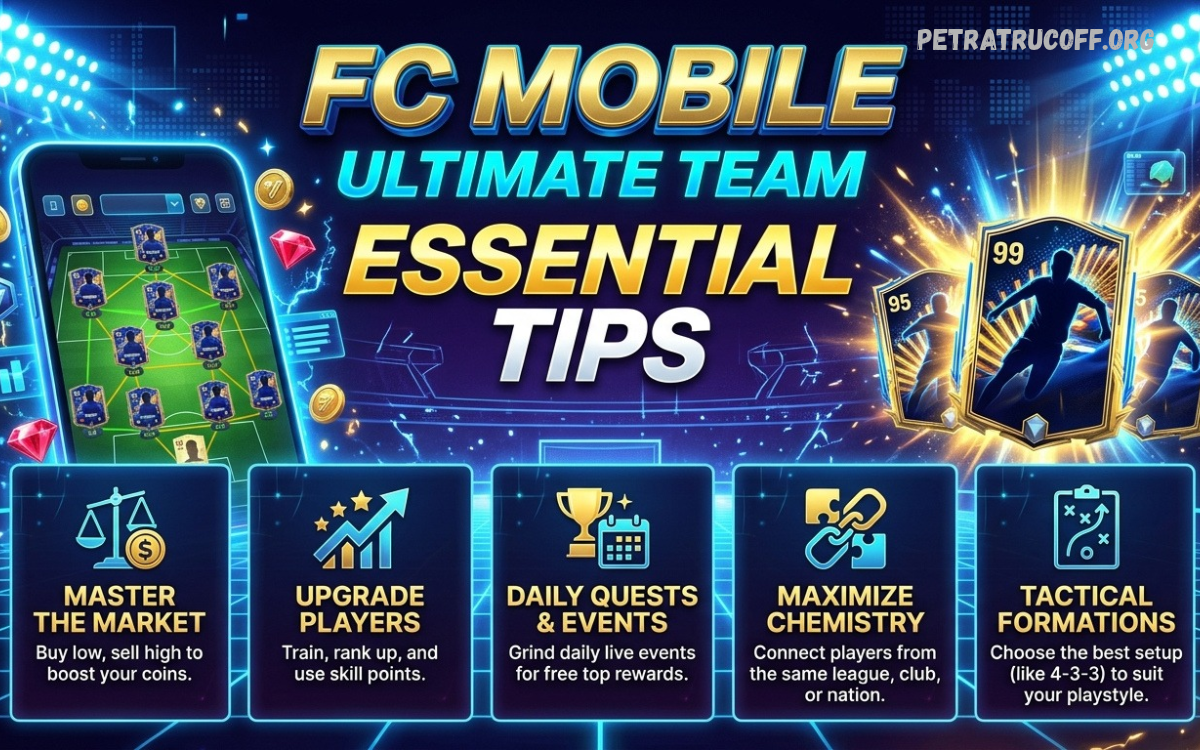
FC Mobile Ultimate Team Tips help players build a competitive squad, improve their football skills, and make smarter in-game decisions. A strong Ultimate Team needs more than high-rated players; formations, player attributes, tactics, and match awareness all affect performance.
Whether you are a beginner or an experienced player, improving your squad takes planning and consistent practice. Learning how to manage resources, select suitable players, and develop effective attacking and defensive strategies can make your team more competitive.
Build a Balanced Ultimate Team
Building a balanced squad is one of the most important FC Mobile Ultimate Team Tips for long-term progress. Instead of collecting only famous players, focus on creating a team with reliable defenders, creative midfielders, dangerous attackers, and a goalkeeper who suits your playing style.
Every position has a different responsibility during a match. A balanced squad should provide defensive stability, midfield control, and attacking opportunities without leaving major gaps that opponents can exploit.
Choose the Right Formation
Your formation determines how players occupy space, support attacks, and protect the defensive line. Formations such as 4-3-3, 4-2-3-1, and 4-4-2 offer different advantages, so select an option that matches your available players and preferred style.
A formation should support your natural approach to football rather than force you to change every habit. If you enjoy attacking through the wings, choose a setup with useful wide players; if you prefer central combinations, prioritize midfield support and suitable attacking positions.
Select Players Based on Attributes
Overall rating is useful when comparing players, but it should not be your only consideration. Pace, shooting, passing, dribbling, defending, physical strength, and other relevant attributes determine whether a player can perform the role you need.
For example, a striker who moves quickly and finishes accurately may suit counterattacking football. A defensive midfielder with strong defensive attributes and reliable passing can help protect the back line while connecting defenders with attacking players.
Improve Your Attacking Strategy
Effective attacking play depends on patience, positioning, and choosing the correct moment to move forward. Avoid rushing every possession because predictable attacks make it easier for opponents to block passing lanes and recover the ball.
Use short passes to maintain possession, switch play when one side becomes crowded, and look for openings before attempting a through ball. Combining intelligent movement with accurate finishing creates better chances than relying on individual skill moves alone.
Master Passing and Ball Control
Passing is essential for controlling the tempo of a match and creating space around the opposition defence. Short passes are useful in crowded areas, while longer passes can help switch the attack or reach a teammate making a forward run.
Ball control also helps you avoid unnecessary turnovers under pressure. Practice receiving the ball, turning away from defenders, and choosing your next action quickly instead of holding possession without a clear purpose.
Use Skill Moves at the Right Time
Skill moves can help you escape pressure, create shooting opportunities, and move past defenders in one-on-one situations. However, using them repeatedly makes your attacks predictable and may cause you to lose possession in dangerous areas.
Learn a small selection of skill moves and understand when each one is useful. Practice their timing in suitable modes, then use them selectively during competitive matches when a defender blocks your route or a direct movement can create space.
Strengthen Your Defensive Skills
Strong defending begins with positioning rather than constantly rushing toward the opponent. Keep your defenders organized, protect the space in front of goal, and use midfielders to apply pressure whenever possible.
Avoid pulling centre-backs away from their positions without a clear reason. When a defender leaves the defensive line, an opponent may exploit the opening with a through pass, quick turn, or forward run.
Improve Tackling and Interceptions
Successful tackling requires patience and awareness of the ball carrier’s movement. Approach attackers carefully, anticipate their direction, and choose a suitable moment to challenge rather than repeatedly attempting tackles from poor positions.
Interceptions are equally important because they allow you to regain possession without committing unnecessary challenges. Watch passing lanes, predict where the ball is likely to travel, and position your midfielders where they can disrupt the opponent’s build-up.
Train and Rank Up Important Players
Training helps improve player attributes, while ranking up can increase overall rating and unlock additional training potential. These upgrades can make important squad members more effective, particularly when you invest in players who already fit your preferred formation.
Before spending training resources, identify the positions that need the greatest improvement. Focus on dependable starters and carefully compare their attributes with potential replacements so that you do not waste valuable resources on players you may soon remove.
Manage Coins Wisely
Coins are an important resource for building and improving your Ultimate Team. Spend them carefully by comparing player prices, evaluating useful attributes, and deciding whether a purchase will genuinely improve your starting lineup.
Avoid making every decision based on excitement after seeing a popular player. Save resources when possible, establish clear squad priorities, and consider selling unused players when their market value makes it worthwhile.
Understand the Transfer Market
The Transfer Market can help you find suitable players and sell cards that no longer fit your plans. Before completing a purchase, compare similar cards, check their attributes, and consider whether the player offers meaningful improvements over your current starter.
Market prices can change as events introduce new rewards and player cards. Avoid assuming that an expensive card will always provide the best value, and remember that prices and availability can vary over time.
Complete Events and Daily Activities
Regular activities and seasonal events can provide opportunities to earn rewards, collect players, and develop your squad. Check available objectives and event requirements so that you can prioritize activities that support your current goals.
Choose rewards based on their practical value rather than their appearance alone. A useful player, upgrade resource, or valuable market item may contribute more to your progress than a reward that does not fit your squad.
Select the Best Players for Your Budget
A strong team does not always require the most expensive cards in the market. Players with suitable attributes and dependable performance can provide excellent value when their strengths match your formation and tactical approach.
Compare several options before spending coins on a major upgrade. Consider pace for wide attackers, defensive awareness for centre-backs, passing for midfielders, and finishing for strikers to make informed choices.
Choose a Reliable Goalkeeper
The goalkeeper plays a crucial role in protecting your team during close matches. Compare relevant attributes such as reflexes, positioning, handling, and height where applicable, while also considering how the goalkeeper performs within your defensive setup.
Do not replace a reliable goalkeeper simply because another card has a higher overall rating. Review the differences between available options and prioritize improvements that address weaknesses you have noticed during actual matches.
Build a Strong Midfield
The midfield connects your defence with your attack and influences how effectively your team controls possession. A well-balanced midfield should combine passing ability, defensive contribution, movement, and enough creativity to support forwards.
Consider using players with complementary strengths rather than choosing midfielders who all perform the same role. A defensive midfielder can protect the back line, while a creative player can open passing lanes and help attackers receive the ball in dangerous positions.
Improve Wing Play and Crossing
Wide attackers can stretch defensive lines and create space for teammates centrally. Use pace, controlled dribbling, and accurate passing to move down the wings without repeatedly running into defenders.
Crossing works best when the intended receiver is positioned well and the delivery is appropriate for the situation. Consider your winger’s and striker’s attributes, watch defensive pressure, and avoid hopeful crosses into crowded areas without a clear target.
Read Also: FC Mobile Goalkeeper Tips: Best Strategies to Improve Your Goalkeeping Skills
Develop Better Shooting Skills
Finishing requires the right balance of positioning, timing, and shot selection. Before shooting, assess the goalkeeper’s position, the angle toward goal, and whether a teammate offers a better passing opportunity.
Practice different shooting situations so you can recognize when a quick attempt, a placed finish, or an alternative attacking move makes sense. Accurate decisions often matter more than taking every possible shot as soon as your player reaches the penalty area.
Use Substitutions Effectively
Substitutions can help maintain performance when players become tired or when the match requires a different tactical approach. A fresh winger may create opportunities against tired defenders, while an additional midfielder can help protect possession and stabilize the team.
Prepare your substitutes before starting a match and select replacements who can perform useful roles. Rather than making changes automatically, consider the score, the remaining time, and the areas where your opponent is creating the most danger.
Adapt Tactics During Matches
A successful team needs flexibility because opponents may change their approach throughout a match. If your attack struggles against a compact defence, adjust your movement and passing patterns instead of repeating the same unsuccessful actions.
Where available, Game Plans can provide additional tactical flexibility by allowing changes to formations and mentalities during supported match modes. Learn which options suit attacking pressure, balanced possession, or protecting a lead, and remember that feature availability can differ between modes.
Prepare for Head-to-Head Matches
Head-to-Head matches reward decision-making, positioning, and the ability to react to another player’s strategy. Begin with a formation you understand, observe the opponent’s attacking habits, and avoid committing too many players forward without defensive cover.
After each match, identify what worked and what needs improvement. Review missed chances, defensive gaps, and lost possessions to find practical adjustments that can improve your next performance.
Improve Performance in VS Attack
VS Attack emphasizes creating scoring opportunities efficiently and finishing chances under pressure. Since the mode focuses on attacking situations, suitable forwards, effective shooting, and quick decisions can make a major difference to your results.
Choose attackers who fit the situations your team regularly faces and practice finishing from different angles. Set-piece takers and the quality of your attacking lineup can also influence performance, so review your team setup before entering competitive attempts.
Avoid Common Ultimate Team Mistakes
One common mistake is changing the entire squad after every disappointing result. Frequent changes can waste resources and make it harder to understand which players genuinely improve your performance, so evaluate each upgrade carefully.
Another mistake is ignoring player roles, defensive positioning, and tactical balance in favor of overall rating alone. Build a consistent team, practice with it, and make targeted changes when you identify a specific weakness.
Create a Consistent Training Routine
Consistent practice helps develop better passing, movement, defending, and shooting decisions. Spend time understanding the controls and improving one skill at a time rather than attempting to change your entire playing style during a single session.
After practice matches, think about your strongest and weakest moments. You may discover that better positioning creates more chances than complicated skill moves, or that patient defending prevents goals more effectively than constant pressure.
Keep Your Squad Updated
New events and player releases can change the available options for squad building. Review new cards carefully and compare them with your current starters before deciding whether a replacement offers meaningful benefits.
An effective squad does not need to change every day. Keep your formation and main strategy consistent while making selective improvements that support your preferred style and address the weaknesses you encounter most often.
Learn from Experienced Players
Watching skilled players can help you understand positioning, passing combinations, defensive timing, and tactical adjustments. Focus on the decisions behind successful plays rather than copying every movement without considering the situation.
You can also learn by reviewing your own match patterns. Notice when you lose possession, which areas opponents exploit, and how your team reacts under pressure, then use those observations to develop practical solutions.
Build a Long-Term Ultimate Team Strategy
Long-term progress comes from managing resources carefully and improving your team with a clear purpose. Decide whether your priority is raising squad quality, improving competitive results, or developing a particular playing style, then choose upgrades that support that objective.
Patience helps you avoid unnecessary purchases and constant tactical changes. A carefully developed squad with complementary players and a familiar formation can become more effective as you improve your understanding of the game.
Frequently Asked Questions
How can beginners build a strong Ultimate Team?
Beginners should start with a balanced formation, choose players who fit their natural positions, and improve their squad’s weakest areas. Completing available activities and managing coins carefully can also help you progress steadily.
What is the most important Ultimate Team tip?
The most important tip is to build a balanced squad that suits your playing style. Strong individual cards help, but effective positioning, suitable attributes, and tactical understanding help the whole team perform consistently.
How can I improve my team without spending money?
Use available events, daily activities, and other in-game rewards to collect resources and players. Save coins for meaningful upgrades, and compare options before you buy.
Should I focus on overall rating or player attributes?
Consider both, because overall rating alone does not tell you whether a player suits a specific role. Compare relevant attributes, preferred positions, and how the player performs within your formation.
How can I defend better in FC Mobile?
Maintain defensive shape, protect passing lanes, and avoid pulling centre-backs out of position unnecessarily. Practice controlled pressure and anticipate the opponent’s next move instead of repeatedly attempting tackles.
How can I score more goals?
Improve your passing, movement, and shot selection, and learn when to use through balls and skill moves. Look for clear opportunities instead of forcing attacks against a well-organized defence.
Is training important in Ultimate Team?
Training improves player attributes, while ranking up can increase overall rating and expand training potential. Prioritize players who are likely to remain important members of your squad.
How often should I change my formation?
Change your formation when your current setup doesn’t support your players or preferred approach. Otherwise, practice consistently with a suitable formation, and adjust when you identify a clear tactical weakness.
Conclusion
FC Mobile Ultimate Team Tips can help you build a balanced squad, use coins wisely, improve player development, and develop stronger attacking and defensive habits.
With regular practice and careful squad management, you can develop a team that better matches your style and compete with greater confidence. Focus on steady improvement, learn from every match, and make each squad upgrade count.
