

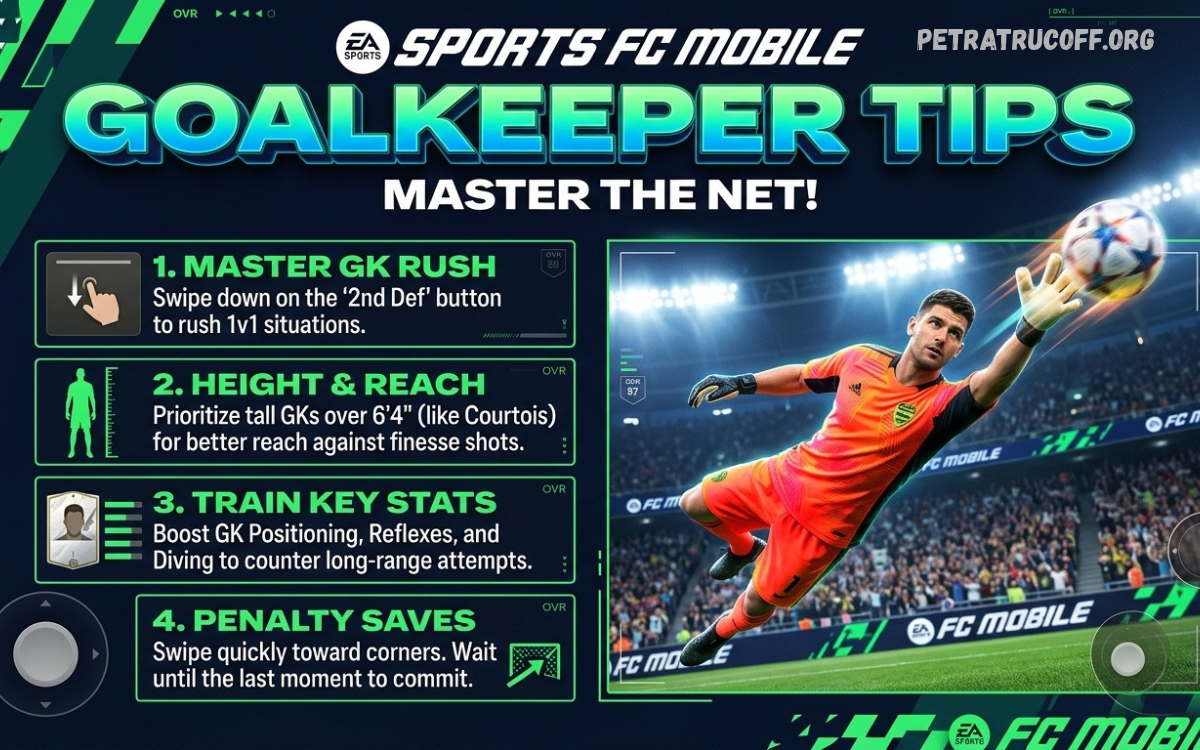
FC Mobile Goalkeeper Tips help players improve their defense, make smarter saves, and concede fewer goals in competitive matches. A goalkeeper plays a crucial role in protecting the net, supporting defenders, and responding quickly to dangerous attacks.
Learning goalkeeper mechanics, understanding shot direction, and maintaining strong defensive positioning can improve match results. Whether you’re playing Division Rivals, Head-to-Head, or other game modes, effective goalkeeping builds confidence and creates more chances to win.
Understanding the Goalkeeper Role in FC Mobile
The goalkeeper is FC Mobile’s final line of defense, responsible for stopping shots, reacting to crosses, and preventing opponents from scoring. Strong goalkeeping takes more than picking a player with a high overall rating; positioning, attributes, and defensive tactics also shape performance.
A reliable goalkeeper can make a difference during close matches, especially when opponents create multiple scoring chances. Choosing the right player and understanding goalkeeper behavior can help reduce defensive mistakes and improve your team’s consistency.
Choose the Right Goalkeeper for Your Team
Selecting a goalkeeper with suitable attributes is one of the most important FC Mobile Goalkeeper Tips for improving defensive performance. Compare reflexes, diving, positioning, handling, and height when evaluating available players, while considering your budget and team requirements.
A goalkeeper with strong reflexes may respond effectively to quick shots, while good diving attributes can help with attempts aimed toward the corners. However, no single attribute guarantees a save, so consider the player’s overall profile and how comfortably the goalkeeper fits your defensive strategy.
Focus on Goalkeeper Reflexes
Reflexes influence how effectively a goalkeeper responds to shots, particularly during fast attacking situations. When opponents shoot from close range, quick reactions can become especially important because the goalkeeper has less time to respond.
Players should compare reflexes alongside positioning and diving rather than focusing exclusively on overall rating. A balanced goalkeeper can provide dependable performances against different attacking styles, including powerful shots, quick finishes, and attempts from inside the penalty area.
Improve Goalkeeper Positioning
Positioning is essential for reducing the amount of space attackers can target when approaching the goal. A goalkeeper who stays appropriately positioned may have a better chance of covering common shooting angles and responding to dangerous attempts.
Avoid moving your goalkeeper unnecessarily because poor positioning can create open spaces for attackers. Instead, observe the opponent’s movement, identify the likely shooting direction, and make adjustments only when the situation clearly requires intervention.
Understand Manual Goalkeeper Movement
Manual goalkeeper movement can provide additional control in situations where an opponent has a clear shooting opportunity. Depending on the available controls and match mode, moving the goalkeeper toward a likely shooting angle may help cover a dangerous area.
However, manual movement requires careful timing and awareness because opponents can change direction or shoot toward the opposite side. Practice small adjustments in suitable matches before relying on this technique during important competitive games.
When Should You Move the Goalkeeper?
Move the goalkeeper when an opponent creates a clear opportunity and you can reasonably anticipate the shooting direction. Situations involving one-on-one attacks or obvious angles may offer opportunities to reposition the goalkeeper, depending on the controls available in your version of FC Mobile.
Avoid moving too early because experienced opponents may notice the opening and aim elsewhere. Learning to recognize shooting patterns, player positioning, and attacking movement can help you make more informed decisions during high-pressure moments.
Master Goalkeeper Positioning Against Long Shots
Long shots can challenge goalkeepers because they often provide more time to react but may travel toward difficult corners. A goalkeeper with good positioning and diving attributes can help defend against these attempts, especially when defenders prevent attackers from shooting without pressure.
Improve long-shot defense by controlling the space outside the penalty area and avoiding unnecessary defensive movement. When your defenders close down the shooter effectively, the opponent may have fewer opportunities to take accurate shots from dangerous positions.
Defend Against Close-Range Shots
Close-range attempts are difficult to stop because attackers can shoot before the goalkeeper has enough time to react. Maintaining defensive pressure and preventing attackers from entering the penalty area freely can reduce the number of situations where your goalkeeper must make emergency saves.
Use your defenders to challenge attackers while maintaining a sensible defensive shape. Instead of depending entirely on the goalkeeper, focus on limiting shooting angles, blocking passing lanes, and preventing opponents from creating clear chances near the goal.
Improve One-on-One Goalkeeping
One-on-one situations occur when an attacker reaches the goalkeeper with limited defensive pressure. These moments require patience because rushing forward at the wrong time can leave the goal exposed and give the attacker an easier finishing opportunity.
Keep track of the attacker’s distance, movement, and likely shooting options before making a decision. Strong defensive positioning can delay the attacker, while carefully timed goalkeeper movement may reduce the available shooting angle when the game allows manual control.
Stop Powerful Shots More Effectively
Powerful shots can become dangerous when attackers have enough space to shoot toward the corners. Goalkeepers with suitable reflexes, diving, and positioning attributes may handle these attempts more effectively, although the result depends on several in-game factors.
To reduce the threat, pressure opponents before they can prepare a comfortable shot. Use defenders to limit their options, protect central areas, and avoid allowing attackers to shoot freely from positions where they can generate dangerous attempts.
Learn to Defend Against Finesse Shots
Finesse shots are designed to curve the ball toward a target, often making placement more important than raw power. These attempts can be challenging when attackers find space near the edge of the penalty area or approach from a favorable angle.
Recognize the attacker’s position and prevent them from taking uncontested shots. Good defensive pressure can disrupt the shooting opportunity, while appropriate goalkeeper positioning may help cover the likely destination of the ball.
Improve Penalty Saving Skills
Penalty situations require attention, timing, and an understanding of how the opponent approaches the kick. Depending on the available penalty mechanics, you may need to anticipate direction, observe player behavior, and choose the right moment to react.
Avoid committing too early when you have limited information about the opponent’s intention. Practice penalty situations whenever possible to become more familiar with the controls and develop a consistent approach to high-pressure moments.
Read Opponent Behavior During Penalties
Observing an opponent’s habits can sometimes provide clues about their preferred penalty direction. Some players repeat familiar patterns, while others deliberately change their choices to avoid becoming predictable.
Do not assume every opponent follows the same pattern because experienced players may use different strategies. Combine observation with careful timing, and remember that successful penalty saves also depend on the game’s mechanics and the choices made during the kick.
Choose Goalkeeper Height Carefully
Height can influence a goalkeeper’s ability to cover certain areas of the goal, particularly when facing high shots and attempts directed toward the upper corners. Comparing player height alongside diving, reflexes, and positioning can help you select a goalkeeper suited to your defensive needs.
However, height alone should not determine your choice because a taller player may not provide the best overall combination of attributes. Consider the complete goalkeeper profile and evaluate performance in actual matches rather than relying on a single statistic.
Understand Goalkeeper Diving Attributes
Diving is an important attribute when evaluating how a goalkeeper handles shots directed away from their starting position. Strong diving ability can be valuable when opponents aim toward the corners, where the goalkeeper may need to cover more distance to reach the ball.
Compare diving with reflexes and positioning when selecting players for your squad. A balanced combination of these attributes can support dependable performances against a range of attacking situations without relying on one particular defensive strength.
Improve Goalkeeper Handling
Handling matters because goalkeepers must deal with shots and other dangerous situations without creating unnecessary follow-up opportunities. When a goalkeeper controls the ball effectively, your team may regain possession and transition into an attack more comfortably.
However, goalkeeper outcomes can vary depending on shot type, player attributes, and the game situation. Keep your defense organized around the penalty area so defenders can respond quickly if the goalkeeper cannot secure the ball immediately.
Use the Right Defensive Formation
Your formation affects the number of shots your goalkeeper faces and the amount of protection available in front of the goal. A balanced formation can help maintain defensive coverage while allowing midfielders and attackers to contribute to possession and counterattacks.
Choose a formation that matches your playing style and the strengths of your defenders. If opponents frequently create chances through the center, consider a setup that protects central spaces and encourages your team to close down dangerous passing lanes.
Strengthen the Defensive Line
A well-organized defensive line reduces the pressure placed on your goalkeeper throughout a match. Defenders who maintain suitable positions can challenge attackers, intercept passes, and prevent opponents from receiving the ball in dangerous areas.
Avoid pulling defenders out of position without a clear reason because doing so can create gaps that opponents exploit. Focus on maintaining team shape, tracking attacking movement, and applying pressure at appropriate moments to reduce clear scoring opportunities.
Improve Goalkeeper Performance in Head-to-Head
Head-to-Head matches require players to defend against human opponents who can change their attacking approach throughout the game. They may use quick passes, long shots, finesse attempts, or sudden changes of direction to create opportunities.
Successful goalkeeping in this mode depends on combining player selection with intelligent defending. Observe how your opponent builds attacks, protect dangerous spaces, and avoid predictable goalkeeper movements that make it easier for opponents to target the exposed side.
Goalkeeper Tips for VS Attack
VS Attack emphasizes attacking chances and finishing opportunities, making goalkeeper performance only one part of the overall experience. Although you cannot control every defensive situation, choosing a suitable goalkeeper can contribute to your team’s ability to handle the chances that occur.
Focus on improving your attacking efficiency while maintaining a strong squad. Select players with useful defensive attributes and understand that match outcomes depend on the game mode, available chances, player ratings, and other gameplay factors.
Select Goalkeepers According to Your Budget
Building a strong team doesn’t always require buying the most expensive goalkeeper available. Compare player attributes, market prices, overall ratings, and your squad’s needs before deciding whether an upgrade offers real value.
A reasonably priced goalkeeper with the right attributes may be a better choice than a costly player who doesn’t fit your budget or defensive strategy. Keep enough resources available for other important positions because goalkeeping is only one part of a balanced team.
Read Also: FC Online: Complete Guide to Gameplay, Features, Updates, and Pro Tips
Upgrade Goalkeeper Training and Rank
Training and ranking systems can improve player performance when the goalkeeper you use has these features. Before spending resources, review the player’s current attributes and identify the improvements that best support your defensive strategy.
Invest carefully because upgrades may require valuable in-game resources. Compare the benefits of improving your existing goalkeeper with the cost of obtaining another player, and choose the option that offers the most useful improvement for your squad.
Understand Goalkeeper Chemistry With the Defense
Although goalkeeper performance is important, the defenders in front of the net also influence how effectively your team handles attacking pressure. Players who work well within your chosen formation can help close gaps, challenge attackers, and reduce the number of clear shots conceded.
Build a defensive unit with complementary strengths rather than focusing on the goalkeeper alone. Fast defenders can help recover against quick attacks, while strong positioning and reliable tackling can reduce the chances opponents create near the penalty area.
Avoid Common Goalkeeping Mistakes
One common mistake is moving the goalkeeper too early and leaving the opposite side exposed. Another is depending on the goalkeeper to stop every attempt instead of preventing dangerous shots through better defensive positioning and pressure.
Players should also avoid selecting goalkeepers exclusively by overall rating or spending resources without comparing attributes. Learning from conceded goals can reveal whether the problem comes from poor positioning, weak defensive coverage, predictable movement, or an unsuitable goalkeeper choice.
Practice Goalkeeping in Different Match Situations
Regular practice helps players understand how their goalkeeper responds to different shooting angles, distances, and attacking patterns. Try observing how the goalkeeper handles long shots, close-range finishes, and one-on-one situations during ordinary matches.
Review difficult moments and identify the decisions that could have improved the outcome. With consistent practice, you can become more familiar with defensive controls, anticipate attacks more effectively, and make better choices under pressure.
Learn From Goals You Concede
Every conceded goal provides an opportunity to examine your defensive decisions and identify possible improvements. Consider whether the attacker had too much space, whether your defenders were positioned correctly, or whether unnecessary goalkeeper movement exposed the goal.
Avoid assuming that every goal results from a weak goalkeeper because attacking quality and defensive mistakes can also determine the outcome. By reviewing different situations, you can make targeted adjustments instead of replacing players without understanding the underlying problem.
Adjust Your Strategy Against Different Opponents
Different opponents use different attacking approaches, so your defensive strategy should remain flexible. Some players rely on fast counterattacks, while others prefer patient passing, wing play, or shots from outside the penalty area.
Observe the opponent’s preferred approach and adjust your defensive shape accordingly. Maintain central protection against direct attacks, watch for dangerous passes toward the wings, and avoid committing too many defenders forward when the opponent is preparing a counterattack.
Keep Your Goalkeeper Updated With Your Squad
As your team improves, review whether your goalkeeper still meets your defensive requirements. New player releases, changing squad budgets, and improvements in other positions may influence which goalkeeper provides the best value for your team.
Compare available players before making an upgrade and avoid replacing a reliable goalkeeper without a clear reason. A balanced squad with suitable defensive attributes can be more effective than a team that invests heavily in one position while neglecting other important areas.
Advanced FC Mobile Goalkeeper Tips for Competitive Matches
Advanced goalkeeping combines player attributes, defensive awareness, timing, and an understanding of the opponent’s decisions. Instead of reacting automatically to every attacking movement, assess the situation and decide whether maintaining position or making an adjustment offers the better defensive opportunity.
Use your defenders to reduce shooting options while keeping the goalkeeper ready for dangerous attempts. Over time, learning to recognize common attacking patterns can help you respond more confidently and reduce avoidable defensive errors in competitive matches.
Best Goalkeeper Strategy for Consistent Results
Consistency comes from choosing a suitable goalkeeper, maintaining a balanced defense, and making sensible decisions throughout the match. High attributes can improve a player’s potential, but they cannot replace careful positioning, effective defensive pressure, and awareness of the opponent’s attacking approach.
Focus on improving one defensive weakness at a time instead of changing your entire team after every defeat. This approach helps you understand which adjustments work, preserve valuable resources, and build a defensive system that supports your preferred style of play.
Frequently Asked Questions
Which goalkeeper attributes matter most in FC Mobile?
Reflexes, diving, positioning, handling, and height are key attributes to consider when choosing a goalkeeper. Their importance depends on your squad, the opponents you face, and the types of shots you commonly concede.
How can I improve goalkeeper performance in FC Mobile?
Choose a goalkeeper with the right attributes, stay in strong defensive positions, and keep opponents from taking uncontested shots. Practice recognizing attacking patterns and use manual goalkeeper movement carefully when the controls allow it.
Is a higher-rated goalkeeper always better?
No, a higher overall rating does not automatically make a goalkeeper the best option for every squad. Compare individual attributes, player cost, and your defensive requirements before choosing an upgrade.
How do I save more penalties in FC Mobile?
Pay attention to penalty mechanics and, when possible, observe your opponent’s behavior. Avoid making predictable decisions, practice the available controls, and remember that the result depends on both your decision and the game’s mechanics.
Should I move my goalkeeper manually?
Manual movement can help in certain situations, especially when an opponent has a clear shooting opportunity. However, moving too early or choosing the wrong direction can expose the goal, so use the technique carefully.
How can I stop finesse shots more effectively?
Reduce the attacker’s space, protect dangerous areas, and prevent comfortable shooting opportunities near the penalty area. Suitable goalkeeper attributes and better positioning can help, but preventing shots is often a key part of defending.
Does goalkeeper height matter in FC Mobile?
Height can affect a goalkeeper’s coverage of certain shots, especially attempts aimed at the higher areas of the goal. However, it should be considered alongside reflexes, diving, positioning, and other relevant attributes.
How often should I upgrade my goalkeeper?
Upgrade your goalkeeper when a new player or available training improvement offers meaningful benefits for your squad. Compare the costs and attribute differences before spending resources, particularly when other positions also need improvement.
Conclusion
Mastering FC Mobile goalkeeper tips means choosing a suitable player, understanding key attributes, improving defensive positioning, and recognizing dangerous attacking situations.
Keep practicing, review the goals you concede, and make thoughtful adjustments to your goalkeeper and defensive formation. With a balanced squad and better decision-making, you can improve your defensive consistency and approach competitive FC Mobile matches with greater confidence.

1 comentario
Pingback: FC Mobile Ultimate Team Tips: Build a Strong Squad and Win More Matches - PetraTrucoff